If you could peer through the solid copper walls of your central heating pipes right now, you might be horrified by what you see. You wouldn’t find crystal-clear, pristine water racing smoothly toward your radiators. Instead, if your system hasn’t been maintained recently, you would likely see a thick, heavy, pitch-black liquid with the consistency of oily melted chocolate.
In the heating sector, this is known as central heating sludge (or black iron oxide). It is the single most destructive element inside any hydronic heating setup.
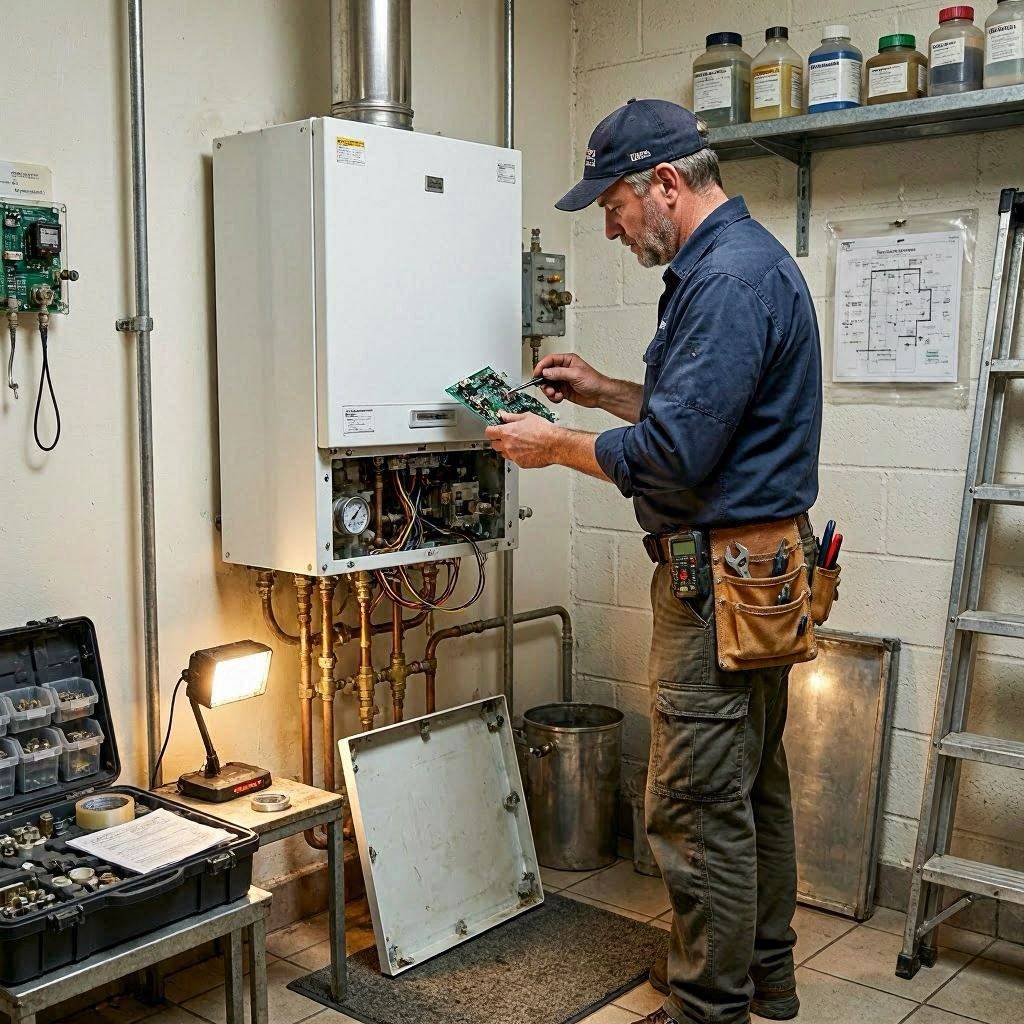
Sludge doesn’t just sit there innocently; it acts like a progressive vascular disease inside your plumbing. It slows down flow, creates freezing dead zones in your rooms, and forces your pump to strain until its bearings snap. Left untreated, this metallic mud travels directly backward into your utility closet, leading to a catastrophic system breakdown that will leave you searching for professional assistance for repairing a boiler during the absolute coldest week of the year.
Let’s dismantle the science behind this black mud, look at the clear warning signs that your system is choking, and explore the industry-grade flushing methods used to clear the pipes and restore factory-level efficiency to your home.
The Birth of Magnetite: Where Does the Mud Come From?
To defeat the sludge, you have to understand how it is born. The majority of household radiators are constructed from mild steel. Your heating pipes, however, are made of copper. When you fill your heating loop with fresh tap water, oxygen is introduced into a closed, high-temperature environment containing two completely different metals.
This creates a textbook chemical reaction: corrosion.
[Oxygenated Fresh Water] + [Mild Steel Radiators] + [Intense Heat]
                                   │
                                   ▼
                [Chemical Corrosion / Oxidation]
                                   │
                                   ▼
             [Microscopic Iron Oxide Shards Detach]
                                   │
                                   ▼
           [Heavy Black Mud Settles in Pipe Network]
As the internal steel walls of your radiators slowly rust from the inside out, microscopic particles of iron oxide detach and fall into the water stream. Because iron oxide is incredibly heavy and highly magnetic (which is why engineers call it magnetite), it doesn’t stay suspended for long. The moment the boiler pump shuts off, this heavy metallic dust sinks to the lowest, quietest zones of your heating circuit, forming a thick, stubborn sludge barrier.
4 Red Flags That Your System is Choking on Sludge
Sludge accumulation is an invisible process that happens over three to ten years. However, your system will emit very specific distress signals when the internal blockages cross a critical threshold.
1. The Classic “Cold Bottom” Radiator
Because sludge is heavy, it settles right at the bottom half of your radiator panels. It creates a dense, insulating layer that completely prevents the hot water from circulating through the lower sections of the metal. If the top of your radiator panel is scorching hot but the bottom center feels like solid ice, your system is packed with mud.
2. Aggressive Boiler Kettling and Banging
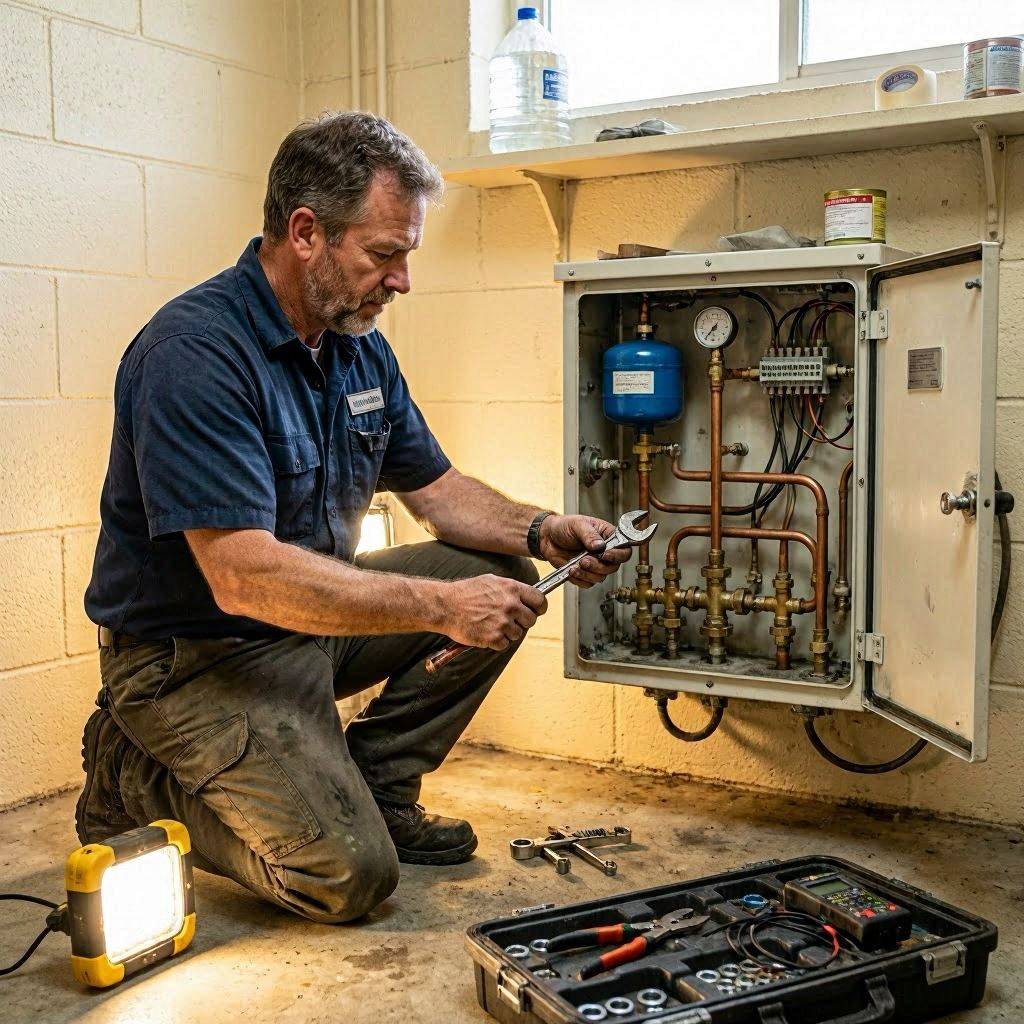
When sludge chips loose, it travels straight to the narrowest, hottest part of your heating unit: the primary heat exchanger. Once inside, it coats the internal copper heat pathways. The boiler flames burn intensely hot, but the heat cannot escape past the sludge blanket into the water. The stagnant water underneath the mud flashes into instant steam, creating loud rattling, whistling, and banging noises known as kettling.
3. Frequent Component Leaks and Lockouts
Magnetite is highly abrasive—it is essentially liquid sandpaper. As the pump forces this gritty liquid through your system, it grinds away at the delicate rubber O-rings, hydraulic seals, and the internal ceramic shafts of your circulator pump. This leads to premature component failures, dripping leaks, and constant low-pressure errors that force your boiler into protective safety lockouts.
4. The “Black Water” Radiator Bleed Test
Want an undeniable diagnostic right now? Grab a radiator key and a white paper cup. Go to your worst-performing radiator and gently open the bleed valve. If the fluid that trickles out is clear or slightly hazy, your system is healthy. If it looks like thick jet-black ink or dark gray mud, your system is under severe internal attack.
The Recovery Strategy: How Professionals Flush the System
When it comes to repairing a boiler system that has been compromised by iron oxide, a basic drain-down from the garden hose won’t cut it. Heavy sludge has a sticky texture that clings to the internal metal profiles. Restoring structural flow requires a strategic, multi-tiered flushing intervention.
| Flush Type | Mechanical Method | Chemicals Used | Best Suited For |
| Chemical Flush | System’s own internal pump circulates a loose agent for 1-4 weeks before draining. | Mild acid or dispersant cleaners (e.g., Fernox F3). | Light, preventative maintenance on newer systems. |
| Power Flush | High-velocity, low-pressure external pump station reverses flow rapidly. | Heavy-duty targeted descalers & sludge lifters. | Severe blockages, noisy boilers, and cold radiators. |
| MagnaCleanse Flush | External pump combined with massive industrial rare-earth magnets. | Rapid-acting advanced chemical cleansers. | Targeted metal extraction before installing a new boiler. |
The Power Flush Protocol: How It Works
A professional heating engineer will isolate your boiler to protect its delicate internal sensors, then hook up an industrial Power Flushing Station directly into your radiator loop.
The machine doesn’t rely on high pressure (which could blow open old radiator seals); instead, it relies on high velocity. It moves massive volumes of water mixed with specialized sludge-lifting chemicals through the system at high speeds.
The engineer will isolate every single radiator in the house one by one, focusing the full force of the machine’s vortex on a single panel at a time. They will use a specialized rubber mallet to vibrate the outside of the cold radiator zones, physically breaking loose the hardened cakes of mud from the internal walls. The machine then captures this liquid mud and expels it directly into your outdoor drain, replacing it with fresh, crystal-clear water.
Long-Term Defense: How to Keep the Mud Away
Once your pipework has been scoured clean and your radiators are heating up evenly from top to bottom, you must implement defensive engineering to ensure the corrosion loop doesn’t restart immediately.
                  [THE POST-FLUSH FORTRESS]
                              │
         ┌────────────────────┴────────────────────┐
         ▼                                         ▼
[Chemical Inhibitors]                    [Magnetic Sludge Filters]
A specialized liquid (Class 1 Boiler     A physical canister fitted to the return
Inhibitor) is injected to form a         pipe that uses a neodymium magnet to trap
protective film inside the steel panels. magnetite before it can enter the boiler.
1. The Power of Chemical Inhibitors
Fresh water is the enemy of raw steel. Immediately after a flush, a technician will inject a premium chemical inhibitor into the clean water loop. This chemical bonds with the internal metal surfaces on a molecular level, creating a micro-protective barrier that prevents oxygen from reacting with the iron. It stops corrosion before it can even start.
2. Fitting a Magnetic Dirt Filter
This is the ultimate upgrade for any hydronic system. A compact canister containing a massive, high-powered magnet is spliced directly onto the return pipework right before it enters your boiler. As the water travels around your house, any tiny particles of iron oxide that manage to form are instantly sucked out of the stream by the magnet, keeping your boiler’s internal heat exchanger perfectly clean 364 days a year.
Clear the Pathways for Winter
Sludge buildup is a silent utility tax. It makes your radiators inefficient, burns excess gas, and puts immense mechanical stress on your heating infrastructure.
By identifying the warning signs early—feeling your radiator panels for dead zones, testing your water color, and investing in a professional power flush when the black mud takes over—you protect your household budget from sudden emergency breakdown fees. Keep your water clean, keep your flow unhindered, and your home will stay reliably, comfortably warm through the deepest winter freezes.