It always happens during the absolute coldest week of the winter. The temperature drops well below freezing overnight, the wind is howling outside, and you wake up to a house that feels like an icebox. You walk over to your modern, high-efficiency condensing boiler, only to find it completely dead, flashing a cryptic error code on the screen—likely something like EA, F28, or E133—accompanied by an ominous gurgling sound.
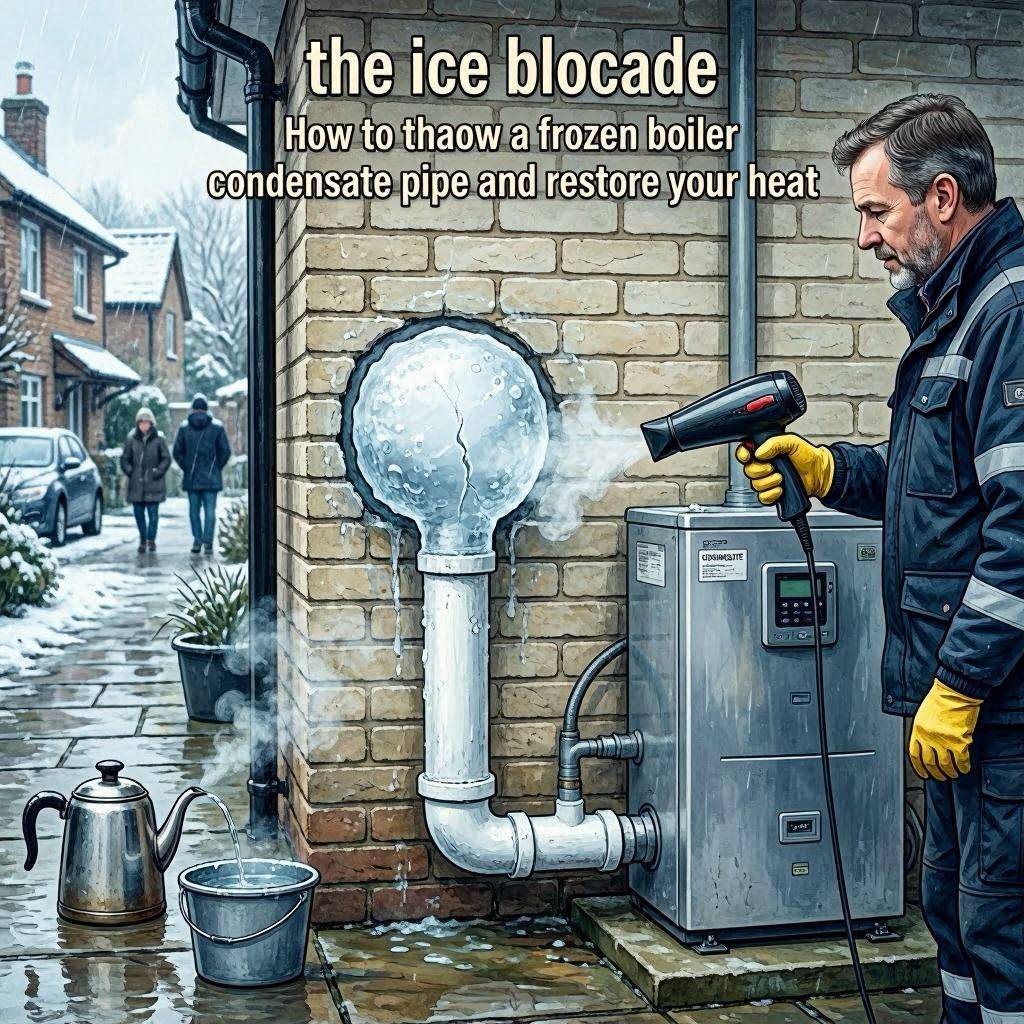
When a modern boiler shuts down in the dead of winter, many homeowners panic, assuming the entire internal computer or heat exchanger has suffered a catastrophic failure.
However, more than 70% of winter boiler breakdowns aren’t caused by internal mechanical meltdowns. Instead, the culprit is a simple plastic pipe running out of the bottom of your boiler and through your exterior wall.
A frozen condensate pipe is the ultimate Achilles’ heel of modern heating technology. If that external drain pipe freezes solid, the boiler’s safety sensors immediately lock the entire system down to prevent toxic wastewater from backing up into your living room.
If you are currently shivering in a freezing house, let’s look at why this design flaw happens, how to thaw it out safely without causing permanent damage, and how to avoid premium emergency fees for repairing a boiler.
What is a Condensate Pipe and Why Does It Freeze?
To fix the problem, you need to understand why modern boilers have an extra pipe that older units didn’t.
Modern boilers are “condensing” systems. They are incredibly efficient because they capture the hot exhaust gases that used to fly out of the chimney and recycle that heat back into your water loop. As those exhaust gases cool down inside the boiler, they turn into a highly acidic vapor, which condenses into liquid water.
[Boiler Burns Gas] ──► [Exhaust Gas Cools] ──► [Acidic Water Formed] ──► [Drains Out Condensate Pipe]
This wastewater (condensate) has to go somewhere. Your installer ran a plastic white or gray tube from the bottom of your boiler to a drain. If your boiler is located against an external wall, that pipe often runs outside into a gully or soakaway.
The Anatomy of the Freeze
Because the condensate water drips out slowly—literally drop by drop, like a leaky faucet—it doesn’t have the velocity or thermal mass to resist extreme cold. When the outdoor temperature plummets, those tiny drops freeze layer by layer inside the cold exterior plastic pipe until a solid ice rod forms, completely choking the drain.
The Danger of Ignoring the Blockage
Many homeowners try to repeatedly reset their boiler to force it to fire up. This is a massive mistake that can turn a simple ice problem into an incredibly expensive mechanical repair.
| The Risk | The Consequence |
| Internal Flooding | If the safety switch fails, highly acidic water can back up directly into the boiler’s combustion chamber, ruining the electronics. |
| Cracked Heat Exchanger | Sub-zero water sitting stagnant inside the internal drainage tray can expand, cracking sensitive plastic and aluminum parts. |
| Wasted Emergency Fees | Paying a technician a premium holiday rate just to pour warm water on an outside pipe is an expensive lesson in home maintenance. |
The Practical Guide to Thaw and Fix a Frozen Condensate Pipe
When it comes to repairing a boiler that has locked out due to a frozen drain, the troubleshooting process is entirely external. You do not need to open the boiler casing, meaning you can safely handle this yourself without a professional gas license.
Step 1: Locate the External Pipe
Go outside to the area directly behind where your boiler is mounted indoors. Look for a plastic pipe (usually 21.5mm or 32mm in diameter) protruding through the brickwork and running downward toward a drain or grid.
Step 2: Identify the Freeze Point
The pipe almost always freezes at the most exposed areas:
- The very tip or end of the pipe where it meets the open air.
- Any sharp elbows, bends, or horizontal runs where water pools before dropping.
Step 3: The Safe Thawing Technique
Do not use a blowtorch, heat gun, or open flame to thaw the pipe. Modern condensate pipes are made of PVC or ABS plastic; extreme, concentrated heat will warp, crack, or melt the plastic instantly, turning a minor freeze into a major plumbing emergency.
Instead, use the Hot Water Method:
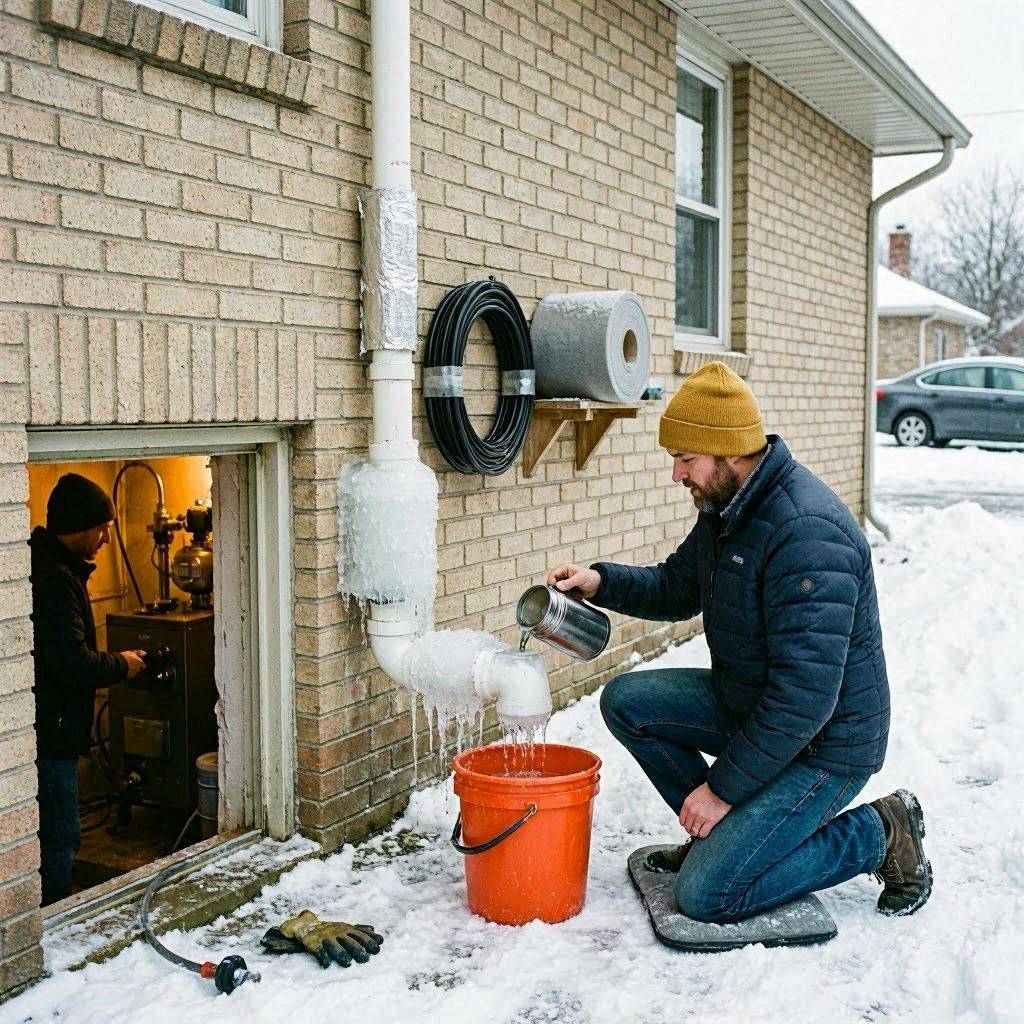
- Fill a large jug or watering can with hot water (not boiling water—boiling water can cause cold plastic to crack due to thermal shock).
- Starting from the top of the exterior pipe run, slowly pour the hot water down the length of the plastic casing.
- Pay special attention to the elbows and joints.
- You can also wrap a hot water bottle or a towel soaked in hot water around the frozen section for a few minutes.
Once you hear a sudden gurgling sound followed by a satisfying swoosh of water dumping out of the end of the pipe, you have successfully broken the ice blockade.
Step 4: Reset the Boiler
Go back inside to your heating unit. Press the “Reset” button (or turn the power switch off and on again). The boiler will run through its startup checks, realize the drain is clear, and fire up normally, sending heat back into your radiators within minutes.
Permanent Fixes: How to Prevent It from Happening Again
Pouring hot water on a pipe in a blizzard is a miserable experience. Once your home is warm, you need to implement long-term preventative measures so you don’t find yourself repeating this process during the next cold snap.
                  [How to Winterproof Your Condensate Drain]
                                      │
         ┌────────────────────────────┴────────────────────────────┐
         ▼                                                         ▼
[Insulate the Exterior]                                   [Increase the Diameter]
Wrap the pipe in weatherproof,                            Upgrade thin 21mm pipe
UV-resistant Class O foam lagging.                        to 32mm or 40mm thick pipe.
1. Upgrade the Pipe Diameter
If your external pipe is a thin 21.5mm tube, it is incredibly prone to freezing. Have a technician upgrade the external run to a much thicker 32mm or 40mm pipe. The wider opening makes it significantly harder for a solid ice bridge to form across the interior walls.
2. Apply Class O Weatherproof Insulation
Go to your local hardware store and purchase heavy-duty, UV-resistant foam pipe insulation (often labeled as Class O lagging). Wrap every single inch of the exposed outdoor plastic pipe, securing the joints with waterproof tape. This holds in the residual heat of the wastewater, preventing it from hitting freezing temperatures before it exits into the drain.
3. Reroute the Pipe Internally
If your home layout allows for it, the absolute best solution for repairing a boiler’s vulnerability to freezing weather is to eliminate the outdoor pipe entirely. A heating engineer can reroute the plastic drain internally, tapping it directly into a kitchen sink waste pipe, a washing machine drain, or an internal soil stack. If the pipe never goes outside, it can never freeze.
Respect the Frost
A frozen condensate pipe is an annoying byproduct of highly efficient heating engineering, but it is an issue that is entirely within your control.
By treating the problem with patient, gentle heat rather than brute force, you can get your system back online in under an hour without spending a fortune. Take the time this weekend to insulate your external lines, clear away debris from your outdoor drains, and ensure that when the next deep freeze arrives, your heating system keeps running smoothly without a hitch.