You wake up on a freezing morning, head to the radiator to feel that comforting wave of heat, and find the metal completely ice-cold. You check the thermostat; it is set to a cozy 21°C. You listen closely, but the usual reassuring hum of your heating system is entirely absent.
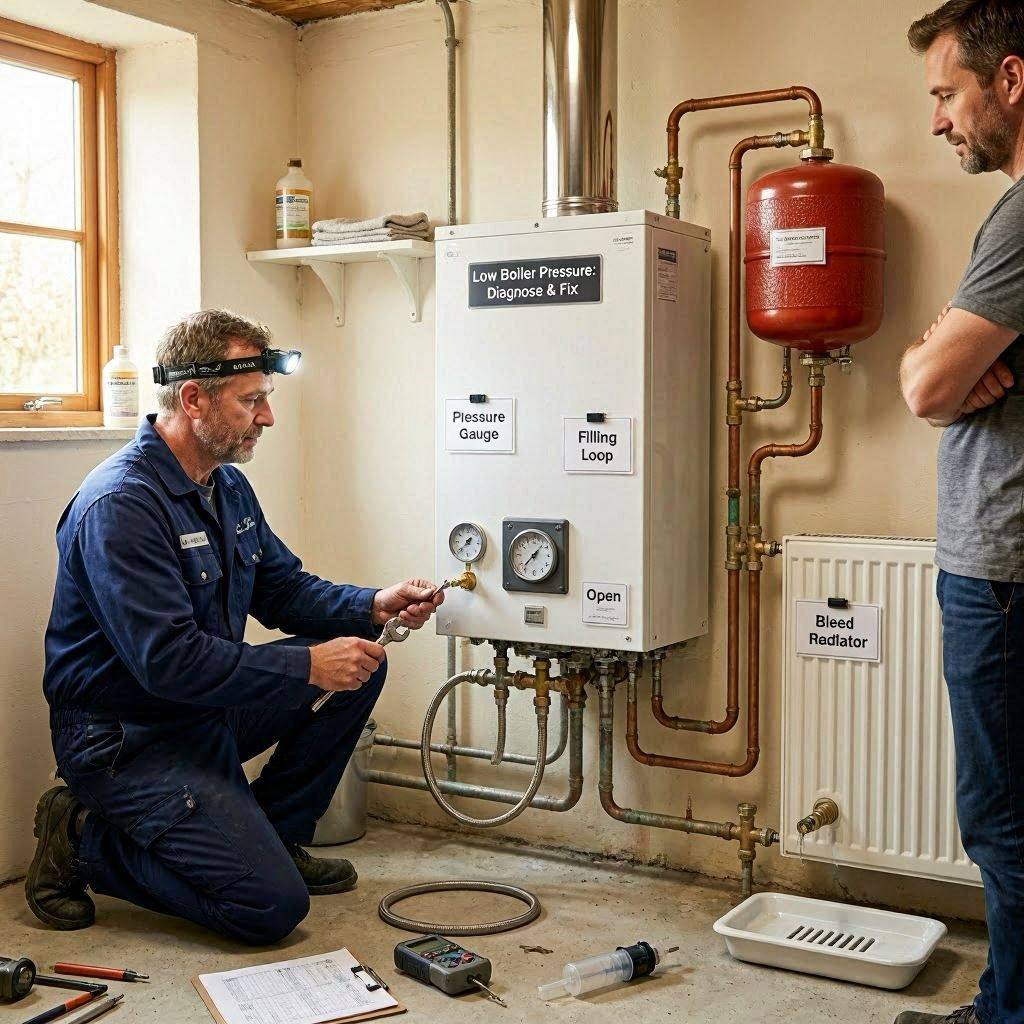
When a modern hydronic heating system goes completely dead without warning, the culprit is rarely a catastrophic mechanical explosion. Instead, it is almost always a small, round dial on the front of your unit pointing directly into a bright red warning zone.
Low boiler pressure is the unsung villain of home heating. Think of water pressure as the blood pressure of your heating system; if it drops too low, the water cannot physically circulate to your upper floors, and the boiler’s computer will shut the entire operation down to prevent the system from firing dry.
If you are currently staring at a dead system, let’s pull back the utility door, look at exactly why your system is losing its punch, and walk through the real-world process of restoring your pressure before you wind up paying premium emergency rates for repairing a boiler.
The Pressure Gauge: Deciphering the Numbers
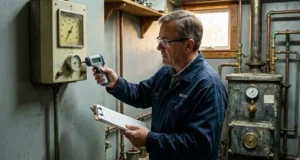
Before grabbing any tools, you need to understand what your system is trying to tell you. Every modern pressurized or sealed boiler system has a pressure gauge on the control panel—either a physical needle or a digital display screen.
 [ 0.0 - 0.9 Bar ]  ──►  CRITICAL LOW  ──► Boiler shuts down (Safety Lockout)
 [ 1.0 - 1.5 Bar ]  ──►  GREEN ZONE    ──► Perfect operational pressure (Cold System)
 [ 2.0 - 2.5 Bar ]  ──►  HIGH ZONE     ──► System is hot / Running at capacity
 [ 3.0 Bar +     ]  ──►  CRITICAL HIGH ──► Pressure Relief Valve (PRV) opens to dump water
If your needle is resting lazily below 1.0 bar, your boiler does not have enough water volume inside its loop to trigger the pressure switch. It enters a “safety lockout” mode, refusing to fire until you give it what it needs.
3 Hidden Reasons Your Boiler Pressure is Plummeting
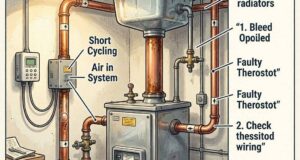
Water inside a sealed central heating system has nowhere to go. It is a completely closed loop. If your pressure has dropped, it means water is escaping somewhere, or the system’s internal balancing mechanisms have failed. Here are the three main causes:
1. The Slow, Stealthy Pipe Leak
This is the most common reason for a gradual pressure drop over weeks or months. It doesn’t have to be a dramatic, ceiling-ruining flood. A microscopic gap in a copper solder joint beneath your floorboards, or a tiny, weeping pinhole leak behind a radiator valve, is enough. As the hot water drips out and evaporates instantly on the warm metal, your system steadily loses its pressure bar by bar.
2. You Recently Bled Your Radiators
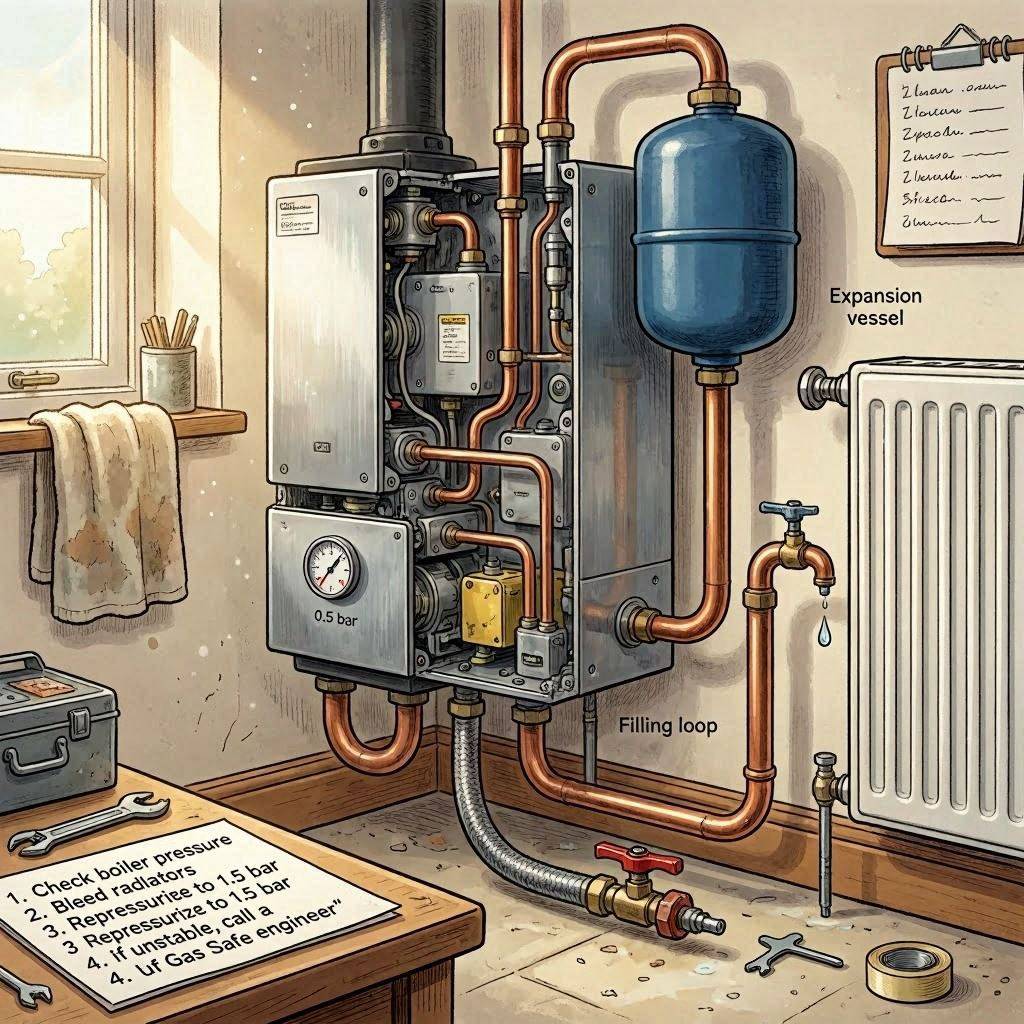
Did you notice cold spots at the top of your radiators last week and decide to bleed them with a radiator key? While bleeding gets rid of trapped air and makes your radiators heat up evenly, that escaping air takes up physical volume. When you let the air out, the overall pressure inside the closed loop drops. If you bleed multiple radiators without topping up the water afterward, you will plunge your boiler straight into a low-pressure lockout.
3. A Ruptured Expansion Vessel Membrane
Inside your boiler sits a vital component called the expansion vessel. It looks like a small metal tank, split down the middle by a flexible rubber diaphragm. On one side is water; on the other side is pressurized nitrogen gas. When water heats up, it expands. The rubber diaphragm flexes against the gas to absorb that extra volume.
If that rubber membrane ruptures or loses its gas charge, the expanding hot water has nowhere to go. The pressure spikes wildly up to 3.0 bar, forcing the safety Pressure Relief Valve (PRV) to open and dump water outside your house. Once the system cools down, it suddenly finds itself starved of water, causing the pressure gauge to hit zero.
The Blueprint for Topping Up Your System Pressure
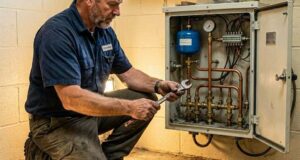
When it comes to repairing a boiler suffering from a low-pressure lockout, the re-pressurizing process is one of the few tasks a homeowner can safely perform without a professional license.
| Step Type | Action Required | Complexity | Risk Factor |
| Diagnostic | Inspect radiator valves and ceilings for dampness. | Low | None |
| Maintenance | Locate and operate the external filling loop valves. | Low | Low (Avoid overfilling) |
| Advanced Repair | Re-charging or replacing the expansion vessel. | High | High (Requires professional tools) |
How to Use Your Filling Loop Safely
To put water back into the system, you need to locate the filling loop. This is usually a flexible silver braided hose with two small tap valves located directly underneath your boiler.
- Turn the Power Off: For safety, completely switch off the electrical supply to your boiler and let the system cool down for an hour.
- Attach the Loop: If your filling loop isn’t permanently attached, screw both ends securely onto the corresponding copper pipes.
- Open the Valves: Slowly turn the handle of the first valve 90 degrees to open it fully. Then, slowly turn the second valve. You will hear a distinct rushing sound as fresh mains water enters the dry heating system.
- Watch the Gauge: Keep your eyes locked on the pressure needle. As it climbs past 1.0 bar, get ready. The moment it hits 1.3 or 1.4 bar, close both valves completely.
- Power Back On: Switch the boiler back on and check if the error code has cleared.
Pro-Tip: Do not get distracted while doing this! If you leave the valves open and walk away, the pressure will skyrocket, forcing the system to vent violently through the overflow pipe outside.
When a Simple Top-Up Isn’t Enough: Calling the Pros
If you top up your boiler pressure on Monday, and by Thursday morning the needle has dropped right back down to zero, stop filling it.
Continually introducing fresh, oxygenated mains water into your heating loop introduces new minerals, accelerates internal corrosion, and dilutes the vital chemical inhibitor that protects your system from rust.
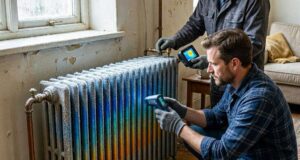
Repeated pressure loss is a definitive sign of a mechanical failure. Whether it is an invisible leak beneath your floors or a completely failed expansion vessel, repairing a boiler with recurring pressure drops requires professional diagnostic equipment. A certified technician can use specialized pressure gauges to test the expansion vessel’s air valve or use thermal imaging to locate hidden leaks without tearing up your drywall.
Maintain the Balance
Low boiler pressure is your system’s way of protecting itself from running dry and melting its own expensive heat exchanger. Treat it as a helpful warning.
By checking your pressure gauge monthly, knowing how to operate your filling loop, and keeping an eye out for minor weeping leaks on your radiator valves, you can keep your system perfectly pressurized. Keep the water inside the loop, keep the needle in the green, and your home will stay reliably warm through the harshest winter months.