You walk into your bedroom on a biting winter evening, expecting a wall of cozy, welcoming warmth. Instead, the room feels distinctly chilly. You walk over to the radiator and run your hand across the painted metal panel. The top section is completely ice-cold, while the bottom feels lukewarm. Or perhaps it’s the exact opposite: the top is hot, but the bottom is packed with a freezing, heavy sludge.
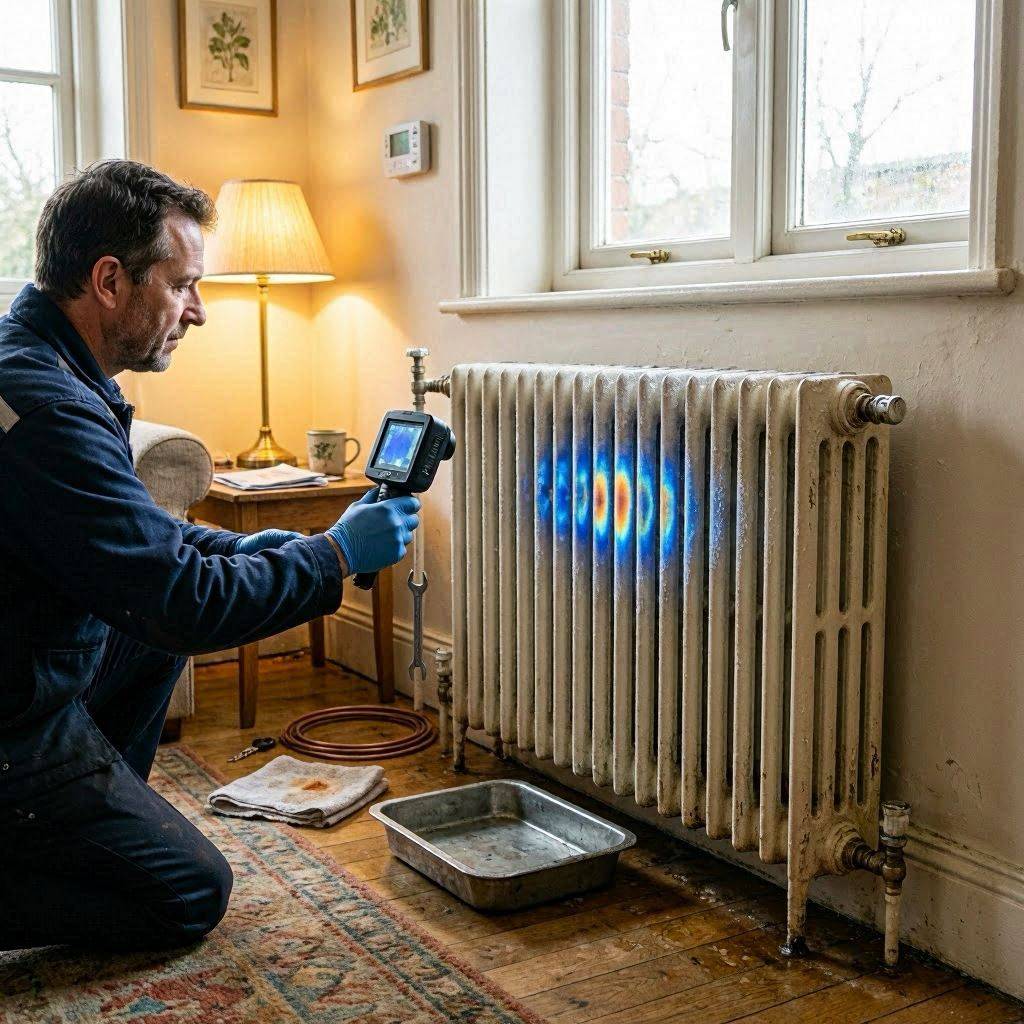
In the heating world, radiator cold spots are the ultimate signs of an inefficient heating system. It’s a frustrating mystery for many homeowners—the boiler is firing up, the pump is humming, and the heating bill is full-price, yet you are only getting half the heat you’re actually paying for.
When your radiators develop these dead zones, it doesn’t just make your rooms uncomfortable; it forces your entire system to run twice as long to meet the thermostat’s demands. If left unaddressed, this constant overworking is a guaranteed way to find yourself searching for professional services for repairing a boiler and its associated components much sooner than you think.
Let’s dismantle the mechanics of your radiators, identify exactly what is causing these cold patches, and look at the real-world solutions to get your system back in perfect balance.
The Cold Spot Roadmap: Where Does It Hurt?
To fix a uneven radiator, you have to look at exactly where the cold spot is located. The position of the cold zone tells a very specific story about what is happening inside your closed-loop pipework.
   [COLD AT THE TOP]                  [COLD AT THE BOTTOM]                [COLD IN THE MIDDLE]
          │                                    │                                    │
          ▼                                    ▼                                    ▼
    Trapped Air                          Iron Oxide Sludge                    Internal Scale
 (Needs Valve Bleeding)               (Needs System Flush)                 (Restricting Flow)
1. Cold at the Top, Hot at the Bottom
This is the most common variant of the problem. When water fills a radiator, it fills from the bottom up. If there is a massive pocket of air trapped inside the top of the panel, the hot water physically cannot rise to fill the space. The air acts like an invisible balloon, blocking the heat from radiating into the upper half of the room.
2. Hot at the Top, Cold at the Bottom
This is the more serious, heavy-metal cousin of the trapped air issue. Over years of operation, the water inside your iron radiators reacts chemically with the metal, creating a black, muddy rust deposit known as magnetite sludge. This heavy, metallic mud settles right at the bottom of your radiators, forming a thick, insulating layer that completely chokes off the flow of hot water to the bottom corners.
3. Entire Radiators are Ice-Cold
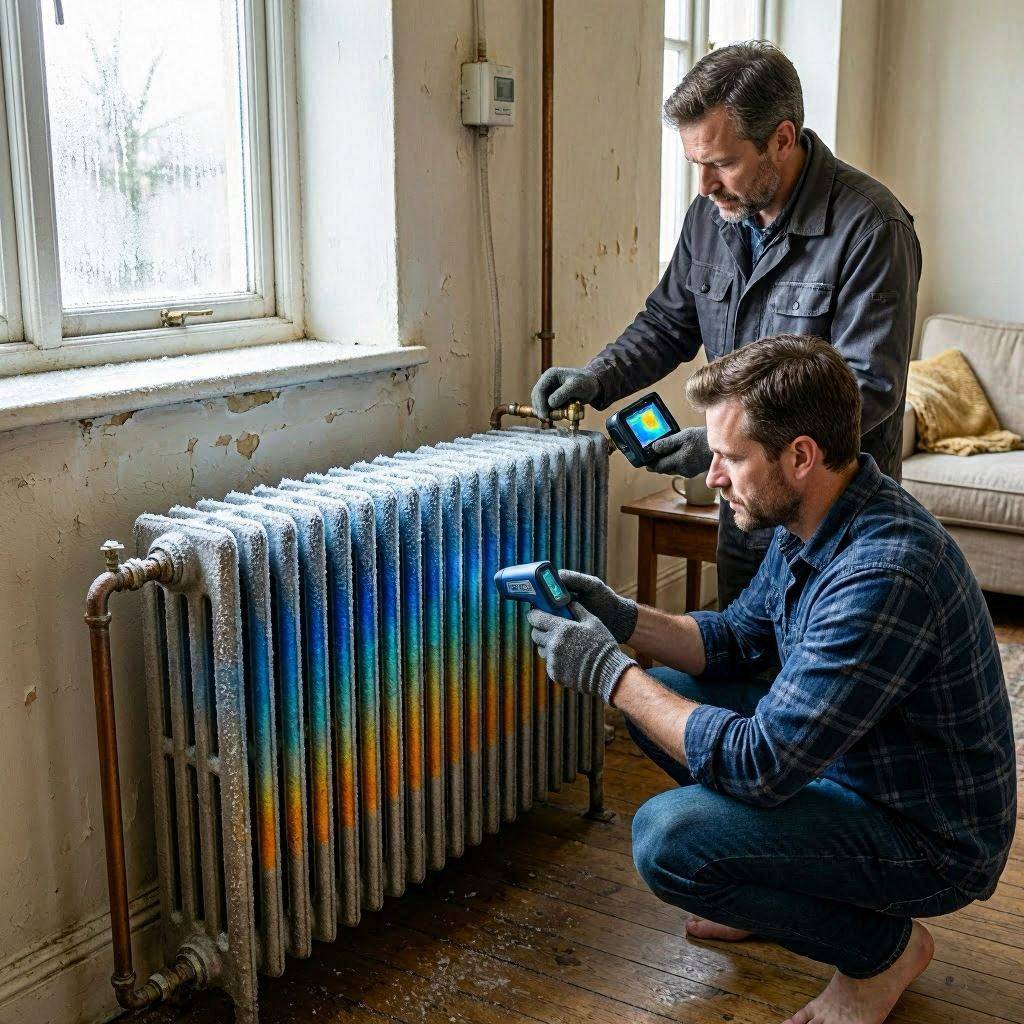
If one specific radiator in your house refuses to heat up at all while every other room is scorching hot, you aren’t dealing with air or mud. You are likely dealing with a frozen or seized internal pin inside your Thermostatic Radiator Valve (TRV) or a completely unbalanced distribution system.
The Blueprint for Fixing Uneven Radiators
When it comes to repairing a boiler system suffering from uneven distribution, troubleshooting should always follow a logical progression from zero-cost DIY fixes to specialized chemical cleanings.
| Diagnostic | Primary Culprit | Tool Needed | Action Plan |
| Top half is freezing | Trapped air pockets | Radiator bleed key | Bleed the air out until water appears |
| Bottom half is freezing | Settled magnetite sludge | System flush pump | High-velocity power flush |
| Entire radiator is dead | Seized TRV valve pin | Pliers / WD-40 | Loosen the internal cartridge pin |
Phase 1: Bleeding the Air Out (The Quick Fix)
If your radiator is cold at the top, you can easily resolve this yourself in less than ten minutes.
- Turn off the heat: Shut down your heating system completely and wait for the radiators to cool down. Bleeding a scorching hot radiator can spray scalding steam and drop your boiler’s internal pressure too rapidly.
- Locate the bleed valve: This is the small square brass plug found at one of the top corners of your radiator panel.
- Open the valve: Place a cloth or a small bucket underneath the valve. Insert your radiator key and gently turn it counter-clockwise about a quarter turn. You will hear a distinct hissing sound as the trapped air escapes.
- Close it tight: The moment the hissing stops and a steady stream of water begins to trickle out, turn the key clockwise to lock it back down.
- Check the boiler display: Go back to your boiler and verify the pressure gauge. Bleeding air will cause the pressure to drop. If it falls below 1.0 bar, use your filling loop to top it back up to 1.3 bar.
The Heavy Cleanup: Dealing with Internal Sludge
If your radiator is hot at the top but cold at the bottom, bleeding it will do absolutely nothing. Air doesn’t sink; mud does.
That black magnetite sludge at the bottom of the panel is highly restrictive. It is too thick to be removed through a tiny bleed valve. If you leave this sludge sitting there, it slowly travels back through your return pipes, entering your boiler’s internal components, coating the circulator pump impeller, and burning out the primary heat exchanger.
At this stage, repairing a boiler and its hydronic system requires a comprehensive Power Flush.
[Power Flush Machine Attached] ──► [High-Velocity Flow] ──► [Chemicals Dissolve Sludge] ──► [Debris Dumped Outside]
A technician will connect an industrial pumping unit directly into your central heating loop. This machine pumps heavy-duty cleaning chemicals through the system at high velocity but low pressure, physically breaking loose the hardened metallic mud and dumping it safely out of your home’s drainage system.
Once completed, every single square inch of your radiator panels will receive an even, unhindered flow of scorching hot water once again.
Balances and Valves: The Finely Tuned Loop
Sometimes, cold spots aren’t caused by air or dirt; they are caused by poor hydraulic balancing.
Water is inherently lazy—it will always take the path of least resistance. If the radiators closest to your boiler are wide open, all the hot water will rush through them and circle back to the boiler, leaving the furthest radiator at the end of the house completely starved of energy.
To remedy this, a professional heating technician will perform a process called system balancing. They adjust the lockshield valve (the small covered valve on the opposite side of the radiator’s temperature dial) on every unit in the house. By restricting the flow slightly on the closest radiators, they force the boiler’s pump to distribute water evenly across the entire property, eliminating systemic cold spots forever.
Pay Attention to the Signals
Your radiators are the mouthpieces of your heating system. When they develop cold spots, they are trying to communicate that the system is losing its internal balance, flow, or cleanliness.
By taking the time to inspect your radiator panels early in the season—bleeding out trapped air, unsticking jammed valve pins, and investing in a professional flush when sludge begins to settle—you protect your pocketbook from massive winter fuel bills and safeguard your boiler from premature wear and tear. Keep the water clean, keep the air out, and your home will stay consistently and comfortably warm through every freezing winter storm.