There are few morning experiences more jarring than stepping into the shower, turning the valve to full heat, and being blasted by a jet of glacial water. Your eyes snap open, your skin goosebumps, and your entire morning routine instantly derails. You wrap yourself in a towel, walk to the utility closet, and stare at your heating unit. The digital display is flashing an angry warning light, or worse, sitting completely dead.
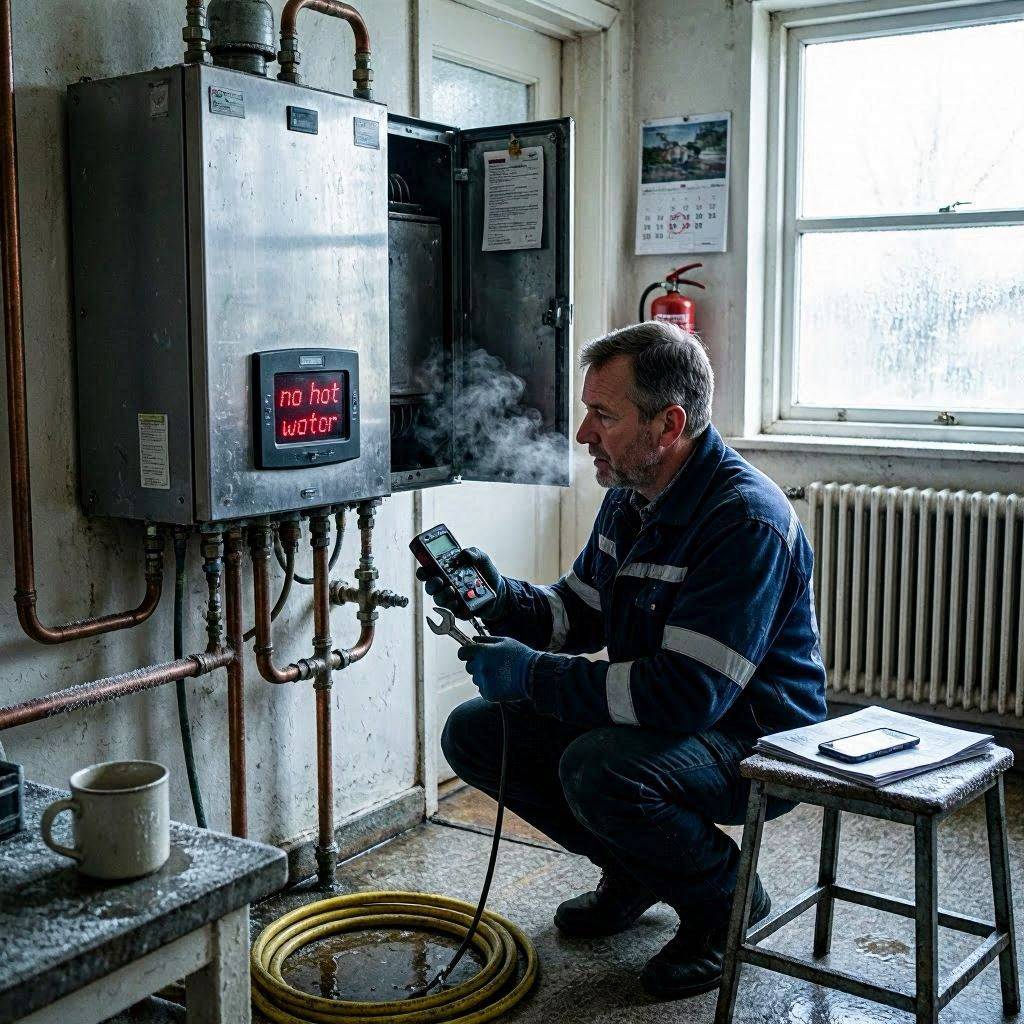
When your system triggers a no hot water error, it is easy to assume the worst. You start visualizing massive bills, days of shivering in a freezing house, and the stressful ordeal of finding a technician capable of repairing a boiler without charging you an absolute fortune.
But here is the insider secret from the heating trade: a sudden loss of hot water doesn’t automatically mean your boiler is ready for the scrap heap. Often, it is a localized, defensive shutdown triggered by a specific sensor trying to protect the internal electronics.
Let’s pull off the front cover panel, trace the mechanical paths that deliver heat to your taps, and walk through how to diagnose, troubleshoot, and resolve a hot water failure like a seasoned industry professional.
The Mechanical Crossroads: How Your Boiler Splits Heat
To find out why your hot water has vanished, you first need to understand the mechanical traffic cop inside your heating unit: the diverter valve.
If your home uses a combination (combi) boiler, the system has to perform a constant balancing act. It cannot heat your radiators and your tap water at the exact same microsecond. It has to choose.
                         [ Central Heating Called ] ──► Radiators Heat Up
                                     ▲
                                     │  (Diverter Valve Shifts)
                                     ▼
 [ Tap Turned On ] ──► [ Microswitch Flips ] ──► Hot Water Routed to Shower
When you open a hot tap anywhere in the house, a small internal paddle detects the rushing water and flips a microswitch. The electronic brain tells the motorized diverter valve to instantly snap shut the pipe leading to your radiators and open the path to a compact internal radiator called the plate heat exchanger.
If this tiny internal traffic cop gets stuck, or if the sensors guiding it misfire, the system gets confused. You might end up with blazing hot radiators but a freezing shower—the classic signature of a failed diverter mechanism.
4 Common Culprits Behind a Hot Water Blackout
If your boiler is refusing to deliver anything but liquid ice, the issue almost always points to one of these four systemic failures:
1. The Stuck or Burned-Out Diverter Valve
Over years of hard service, the small motorized pin that pushes the diverter valve back and forth accumulates black metallic sludge (iron oxide) from your old radiators. Eventually, the valve gets physically jammed in the “heating only” position. The boiler fires up perfectly, but all that gorgeous heat is sent straight into your empty living room radiators instead of your bathroom taps.
2. A Ruptured Diaphragm or Failed Flow Switch
Inside older boilers, a rubber diaphragm flexes when water pressure drops from an open tap, mechanically pushing a pin to ignite the burner. In modern systems, a digital flow sensor handles this. If the rubber splits, or the digital sensor gets coated in limescale, the boiler simply doesn’t realize you have turned the shower on. It sits there idling in standby mode, completely oblivious to your freezing shower.
3. Air Locks in the Hot Water Domestic Loop
If you recently had a radiator replaced, or if your system pressure has been fluctuating wildly, a massive pocket of air can become trapped right inside the domestic hot water pipework. This pocket acts like a physical brick wall, completely stopping the water from moving past the boiler’s internal temperature sensors, triggering a rapid overheat and safety shutdown.
4. Broken NTC Thermistors (Temperature Sensors)
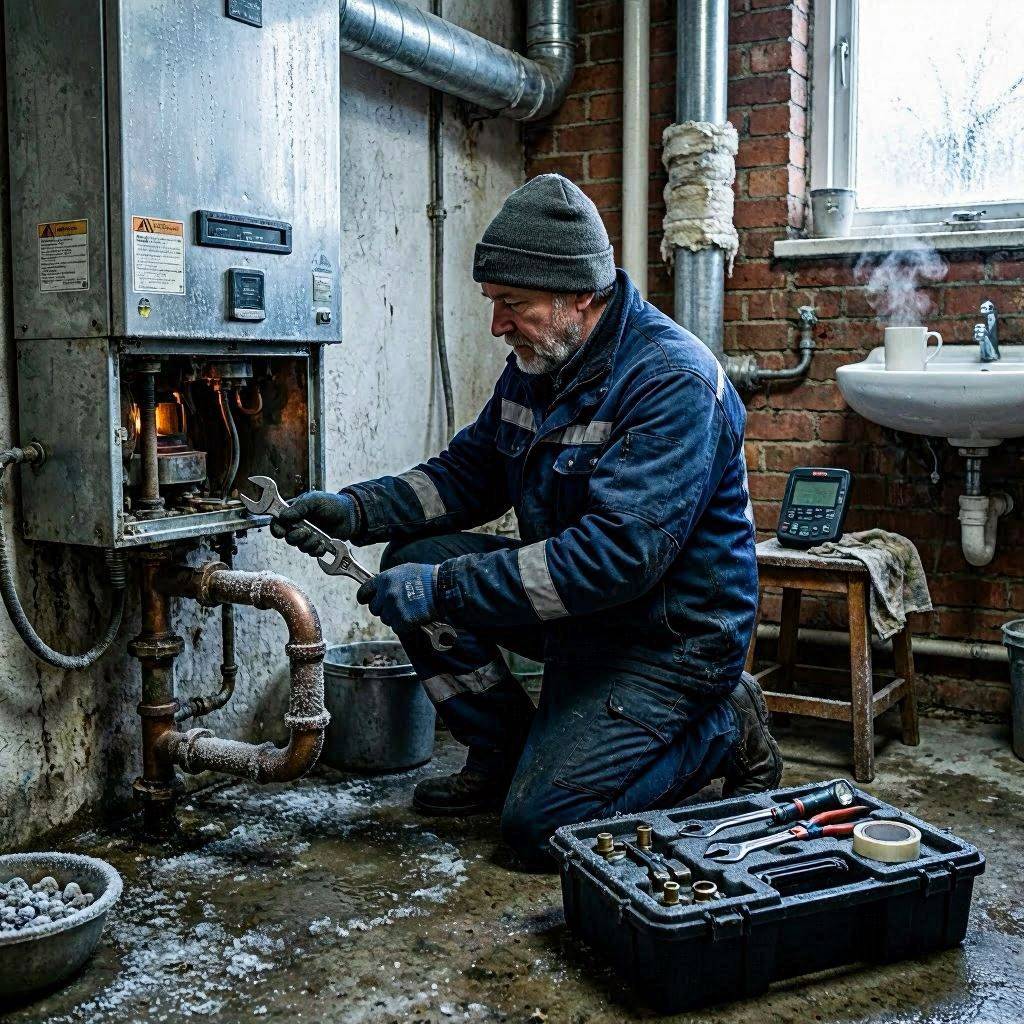
Your boiler relies on tiny resistors called NTC thermistors to monitor exactly how hot the water is. If the hot water sensor fails internally, it might report a false reading to the control board—telling the computer that the water is already boiling hot when it is actually freezing. The computer believes the lie and refuses to ignite the main gas burner.
The Diagnostics Checklist: Isolating the Error
When it comes to repairing a boiler that has dropped its hot water output, troubleshooting is all about process of elimination. Before spending a dime on parts, run through this tactical operational checklist.
| Observation | Probable Root Cause | Fix Complexity |
| Boiler fires up for heating, but stays dead for hot taps. | Defective Flow Switch or Split Diaphragm. | Medium (Requires opening wet components) |
| Boiler fires up, but heat goes to radiators instead of taps. | Stuck or Failed Diverter Valve Motor. | High (Requires professional valve replacement) |
| Boiler displays a specific numeric fault code (e.g., F22, F24). | Low Water Pressure or Air Lock Lockout. | Low (Can be topped up via filling loop) |
| Boiler stays completely dead with no lights on display. | Blown Fuse on PCB or Main Power Supply Issue. | Low (Check consumer unit/spur switch) |
The “Radiator Trick” Diagnostic
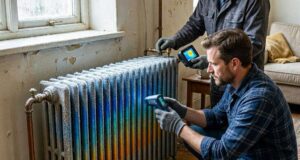
Want to test your diverter valve right now without any tools? Turn your room thermostat down to zero so the heating is completely off and let your radiators cool down completely. Go to your bathroom and run the hot shower for three minutes.
While the shower is running, go feel the copper pipes leading directly out of the bottom of your boiler. If the central heating pipe feels scorching hot while your shower water is lukewarm, your diverter valve is leaking heat into the wrong loop. It’s a definitive diagnosis.
When Does Troubleshooting Cross into Professional Repair?
While checking your digital error codes, topping up low system pressure via your filling loop, or checking for a tripped circuit breaker are perfectly safe tasks for a homeowner, there is a clear boundary line where DIY ends.
If your diagnostic points to a seized diverter valve, a scaled-up plate heat exchanger, or a fried printed circuit board (PCB), repairing a boiler transitions into a strictly regulated trade environment. Working inside the casing requires sealing integrity checks to prevent poisonous carbon monoxide leaks, handling mains voltage circuits, and isolating pressurized water lines.
Hiring a certified, licensed heating professional for these core component changes ensures the work is fully insured, complies with building codes, and keeps your manufacturer’s warranty fully intact.
Restoring the Flow
A “no hot water” error is an incredibly frustrating interruption to your day, but it is rarely a reason to panic. By understanding how the diverter valve shifts heat on demand, reading your boiler’s digital fault codes accurately, and testing components using simple methods like the radiator trick, you can quickly determine whether you are dealing with a simple pressure drop or a mechanical part replacement.
Keep your system clean with an inline magnetic filter, clear out internal scale early, and you can ensure that your morning shower stays perfectly warm and reliable all year long.