It is one of the most frustrating scenarios a homeowner can face: your central heating pressure gauge steadily drops into the red zone, yet every visible pipe, radiator valve, and connection joint throughout your house is completely bone dry. You trace the baseboards, check under the floorboards, and scan the ceilings, but find no puddles, damp spots, or water stains.
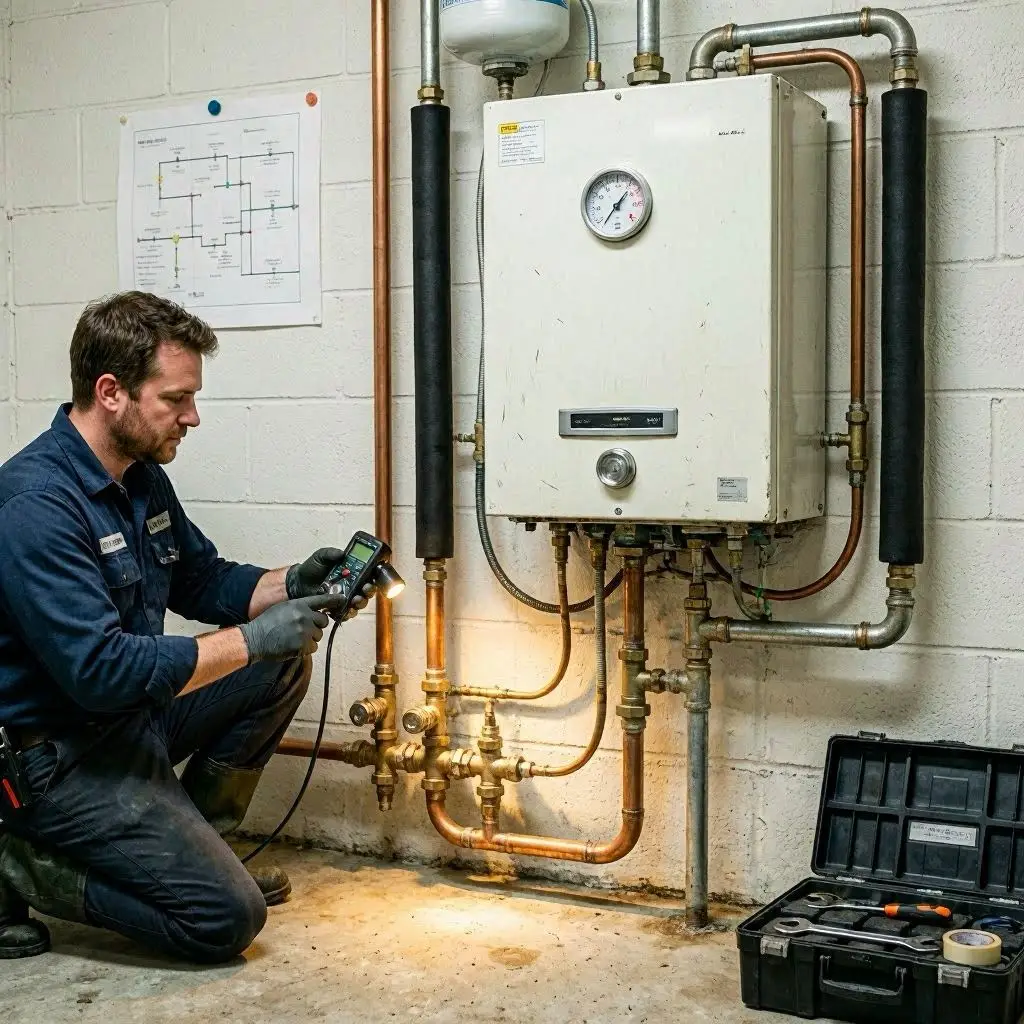
When your boiler losing pressure but no visible leak anywhere becomes a recurring pattern, it creates a technical puzzle. Water is a physical element—it cannot simply vanish from a sealed hydraulic loop. If the system volume is diminishing, water is escaping, but it is doing so either in the form of vapor, behind structural walls, or directly down your home’s drainage system.
1. The Evaporating Leak: Faulty Automatic Air Vents (AAV)
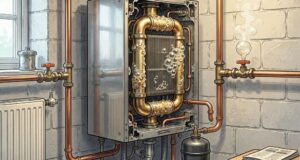
Inside the main boiler casing, usually sitting directly on top of the circulation pump or near the primary heat exchanger, is a small brass component called the Automatic Air Vent (AAV). Its job is to automatically bleed out trapped air pockets from the water circuit so the system doesn’t suffer from airlocks.
How It Hides the Water Loss
The AAV uses an internal float mechanism. Over time, system sludge or hard water limescale builds up on the valve seat, preventing it from closing fully.
- When the valve fails, a tiny amount of hot system water constantly escapes alongside the air.
- Because the boiler operates at high internal temperatures, this escaping water evaporates into steam inside the warm casing before it can drip down to the floor.
- You lose water volume steadily every single day, but you will never see a physical puddle under the appliance.
2. The Drainage Escape: Ruptured Expansion Vessel and the PRV
If your system holds its pressure perfectly when cold, but the pressure needle rapidly spikes straight into the red zone (above 3.0 bar) as soon as the radiators get hot, your internal expansion vessel has lost its functional air charge.
The Invisible Discharge Route
When the expansion vessel fails to absorb the natural thermal expansion of the heating water, the Pressure Relief Valve (PRV) opens to prevent a system explosion. The PRV is connected to a copper discharge pipe that runs directly through your external wall to the outside of your property, or joins into a internal condensate drain.
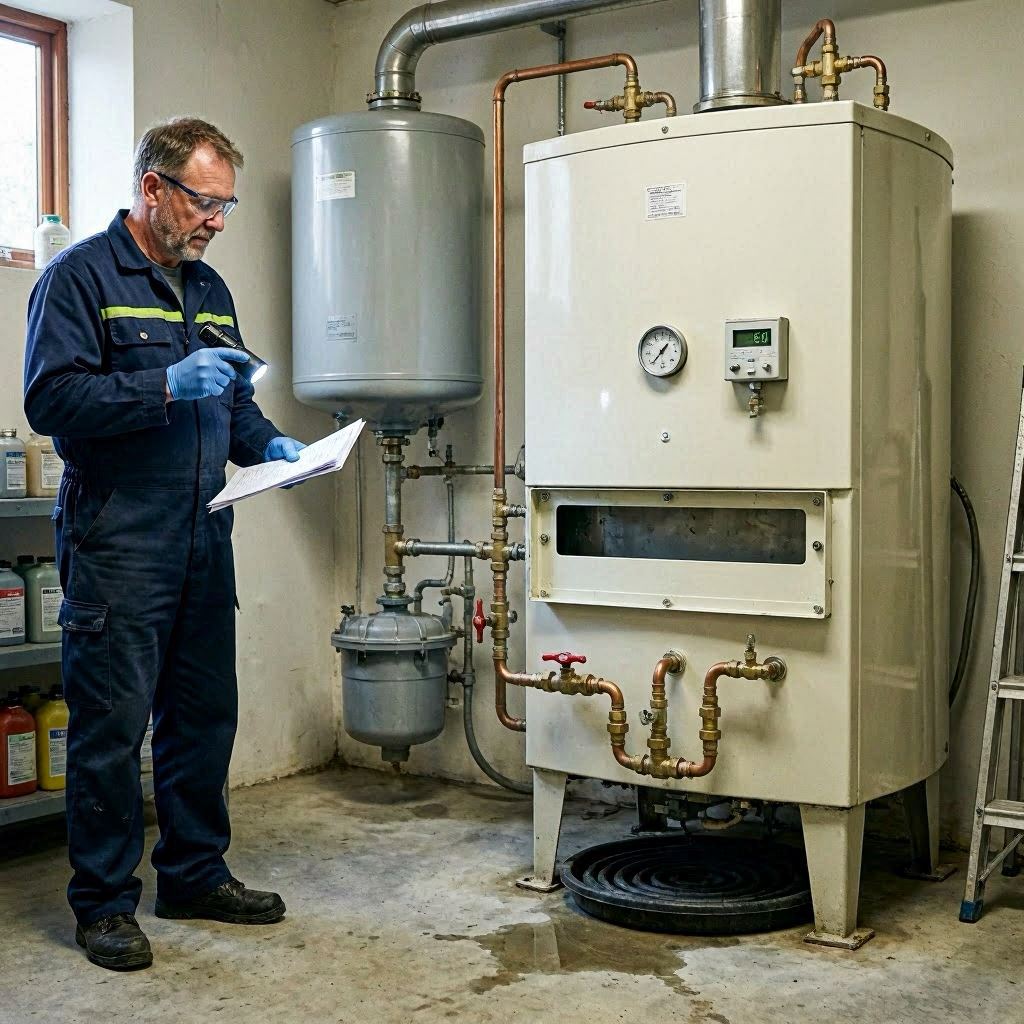
If this pipe is routed straight into an external drain or behind an outdoor downpipe, the boiler will dump hot water outside every time your heating runs. Once the system cools down, the pressure plummets to zero. You are left wondering why the system is empty, unaware that the water was cleanly discharged outside while you were in another room.
3. The Structural Trap: Internal Heat Exchanger Fractures
The most expensive and structurally hidden cause of a mysterious pressure drop is a pinhole leak or micro-fracture inside the main heat exchanger block. This is where the gas burner applies extreme heat to the internal waterways.
The Vaporization Loop: When a micro-crack develops inside a cast iron or aluminum heat exchanger, water weeps out only when the metal expands under flame. Because this happens directly inside the combustion chamber, the leaking water is instantly vaporized by the burners and exits your home harmlessly out of the external roof flue as white steam.
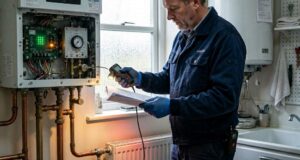
When repairing a boiler with a failed heat exchanger, standard external visual checks are useless. An engineer must isolate the hydraulic flow and carry out a static pressure test exclusively on the heat cell to confirm this internal loss.
Technical Mapping: Root Causes of Hidden Pressure Loss
To help you categorize where your system’s water volume is hiding, evaluate the core technical possibilities below:
| Diagnostic Pattern | Hidden Source of Escape | Immediate Structural Cause | Repair Urgency |
|---|---|---|---|
| Pressure drops only when heating is actively running. | Main Heat Exchanger or External PRV pipe. | Thermal expansion opens a structural fracture or safety valve dumps water. | Critical |
| Steady, slow drop regardless of whether system is hot or cold. | Automatic Air Vent or Hidden underfloor joint. | Mechanical float failure or slow micro-weep inside structural floors. | Moderate |
| Pressure drops rapidly within minutes of filling up. | Ruptured internal rubber bladder or concrete floor leak. | The expansion vessel cannot hold air, or a major pipe joint has parted below ground. | High |
Step-by-Step Diagnostic Routine for Homeowners
If you are constantly toping up the filling loop but cannot see any structural dampness, follow this process to isolate the hidden exit point.
The Method
1
Monitor the External Discharge Pipe
External Check
1.Monitor the External Discharge Pipe:External Check.
Locate the small, curved copper pipe that exits your external brick wall directly behind where your boiler is mounted. Tie a dry plastic sandwich bag around the end of the pipe using a rubber band. Leave it for a full heating cycle. If the bag fills with water, your expansion vessel is faulty and needs recharging or replacement.
2
Inspect the Underfloor Heating Manifolds
Thermal Analysis
2.Inspect the Underfloor Heating Manifolds:Thermal Analysis.
If your home uses underfloor heating (UFH) pipes buried beneath screed or floorboards, locate the central UFH distribution manifold. Check the automatic air bleed valves on the manifold bars. A slow leak here can escape down into the insulation layers beneath the floor without rising to ruin your carpets.
3
Execute a Isolated System Drop Test
Isolation Test
3.Execute a Isolated System Drop Test:Isolation Test.
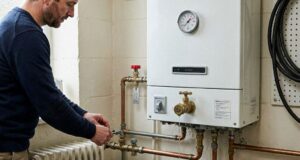
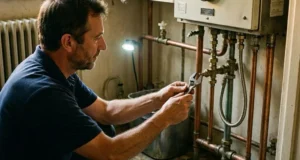
To determine if the leak is inside the appliance or out in your house pipework, a technician can isolate the boiler’s main flow and return valves overnight. If the boiler pressure stays rock solid while isolated but drops when the valves are reopened, the hidden leak is definitively out in your home’s floorboards or walls.
The Long-Term Impact of Constant Re-Pressurizing
Many people treat a mysterious pressure drop as a minor chore, simply opening the filling loop once a week to top the system back up. This is incredibly damaging to your system’s internal components.
Every time you introduce fresh tap water into your heating loop, you are adding fresh oxygen, lime scale, and minerals. The oxygen immediately reacts with the internal iron surfaces of your radiators, creating iron oxide (black magnetic sludge). This abrasive sludge circulates through your system, wearing down pump bearings, blocking the heat exchanger channels, and making the process of repairing a boiler significantly more costly down the road.
If your system is losing pressure, it requires a permanent hydraulic solution, not a perpetual top-up.
When a boiler loses pressure without a visible footprint, it simply means the water has found a clever way to escape your sight. Whether it is vaporizing cleanly into the combustion chamber, escaping as steam out of an internal air vent, or quietly discharging down an external drain via the PRV, a systematic process of elimination will always uncover the source. Isolate the appliance from the pipework, test the integrity of the safety valves, and bring in a professional technician to locate and seal the invisible exit point before sludge destroys your system’s efficiency.