It is a bizarre plumbing contradiction that leaves many homeowners scratching their heads: you walk downstairs in the morning to find your house perfectly warm, your wall thermostat reading its target temperature, and your radiators radiating intense heat—yet the moment you turn on a bathroom or kitchen tap, the water runs completely ice-cold.
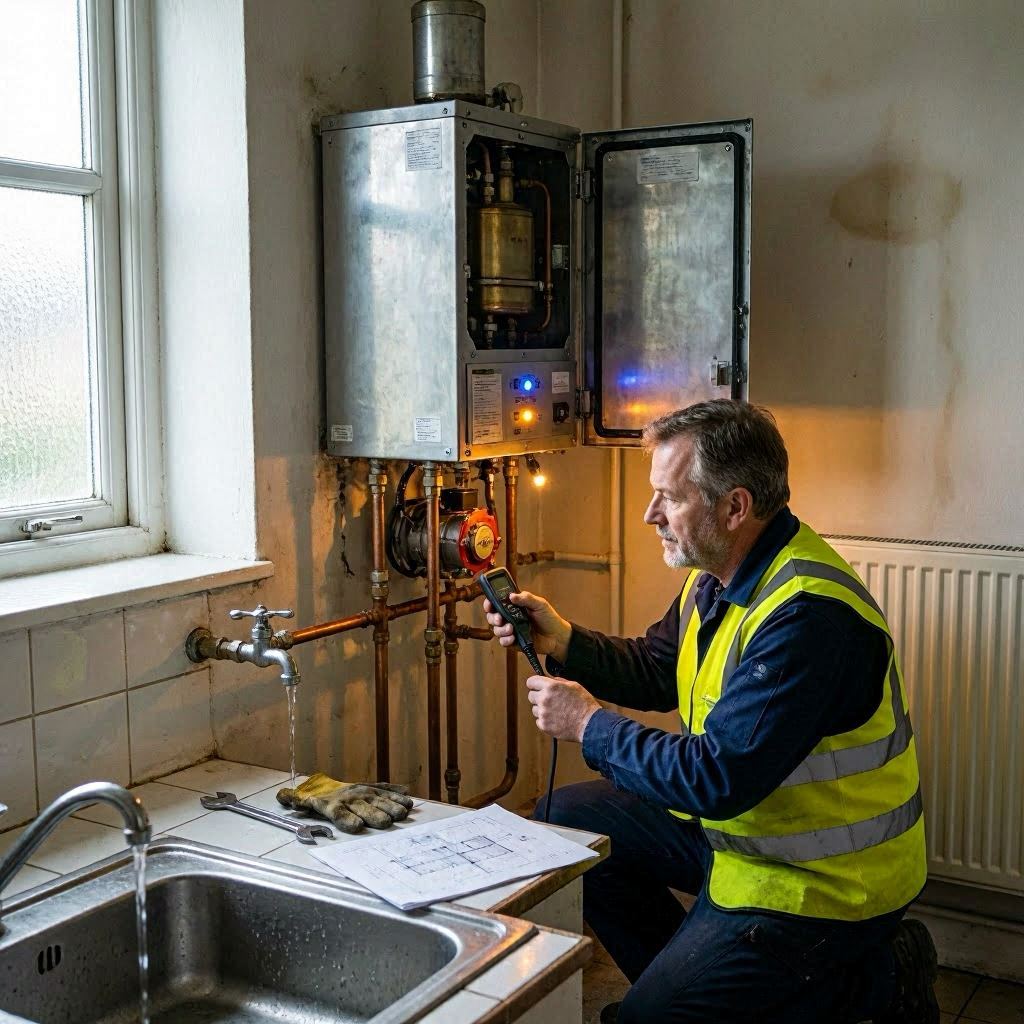
Your gas valve opens, your primary heat exchanger fires up, and your circulation pump is pushing water volume around. The breakdown is entirely localized within the internal mechanism that controls how that heat gets split between your home’s space-heating loop and your domestic plumbing lines.
Tracing this specific fault requires a deep dive into internal fluid redirection and electronic sensory thresholds.
1. The Classic Breakdown: Diverter Valve Failure
If you operate a modern combination (combi) boiler, the single most likely culprit behind this symptom is a completely jammed or failed internal diverter valve.
The Mechanical Traffic Jam
The diverter valve is essentially a motorized gate valve. When you call for central heating, it opens up the path to your radiators. The moment you open a hot water tap anywhere in the house, a sensor signals the valve’s electronic actuator motor to shift position, blocking the radiator loop entirely and channeling all the hot water into a small secondary plates network to heat your tap water on demand.
- The Failure Pattern: Over the years, black iron oxide sludge (radiator rust) accumulates inside the valve. If the valve mechanism gets physically stuck or seized exclusively in the “heating position,” the internal gates will refuse to budge when you turn on your shower.
- The Result: The boiler simply keeps pushing all its thermal energy out to your radiators, completely ignoring your household’s domestic water demand.
2. A Broken Flow Switch or Flow Sensor
Even if your diverter valve is perfectly clean and capable of shifting positions, it will not do so unless the primary control board tells it to. That signal originates from a small internal component called a flow switch or flow turbine.
The Missing Activation Signal
The flow switch sits directly inline on your incoming mains cold water pipe inside the boiler chassis.
- Inside the switch is a tiny plastic paddle wheel or a magnetic float.
- When you open a hot tap, the physical movement of the incoming water spins this wheel or lifts the float.
- This tells the main printed circuit board (PCB): “The user needs hot water right now.”
If this internal paddle wheel becomes jammed with hard water limescale or debris, or if its electronic sensor fails, it stays completely static when the tap runs. The boiler remains entirely blind to the fact that you have opened a tap. Because it receives no activation signal, it stays comfortably parked in its default state, which is keeping your central heating active. When looking at the overall process of repairing a boiler with zero tap response, replacing this simple plastic switch is often the resolution.
3. Burned-Out Valve Actuator Motors
Sometimes, the internal mechanical valve cartridge is completely fluid and unjammed, but the electronic box sitting directly on top of it—the actuator motor—has suffered an electrical failure.
The Actuator Sync Problem: The actuator motor contains small plastic gears and an electric coil that physically pushes down on the diverter valve pin. If the motor’s internal plastic gears strip away, or if the electrical coil burns out due to a minor power surge, the motor loses its mechanical strength.
Technical Mapping: Isolating the Source of Cold Water
To determine if your system’s breakdown is a mechanical jam, an electrical failure, or a sensory blind spot, analyze the technical correlation table below:
| Real-World Symptom | Physical Boiler Reaction | Root Cause Component |
| Hot tap runs cold, but the boiler makes absolutely no noise when tap is opened. | The digital display screen stays idle or stays in heating mode. | Failed or jammed internal Flow Switch / Turbine. |
| Hot tap runs cold; boiler display flashes a tap icon but radiators get hotter. | Internal fan spins up, but heat transfers directly to central heating lines. | Diverter Valve stuck mechanically in the heating position. |
| Hot tap runs lukewarm if flow is very slow, but turns cold at high flow. | The burner ignites briefly but quickly cuts out (Kettling noise). | Heavily scaled Plate Heat Exchanger limiting heat transfer. |
Step-by-Step Diagnostic Protocol for Homeowners
If your radiators are hot but your taps are cold, follow this logical testing sequence under your boiler casing to pinpoint the bottleneck.
The Method
1.Run the Digital Panel Visual Test:Sensory Tracking.
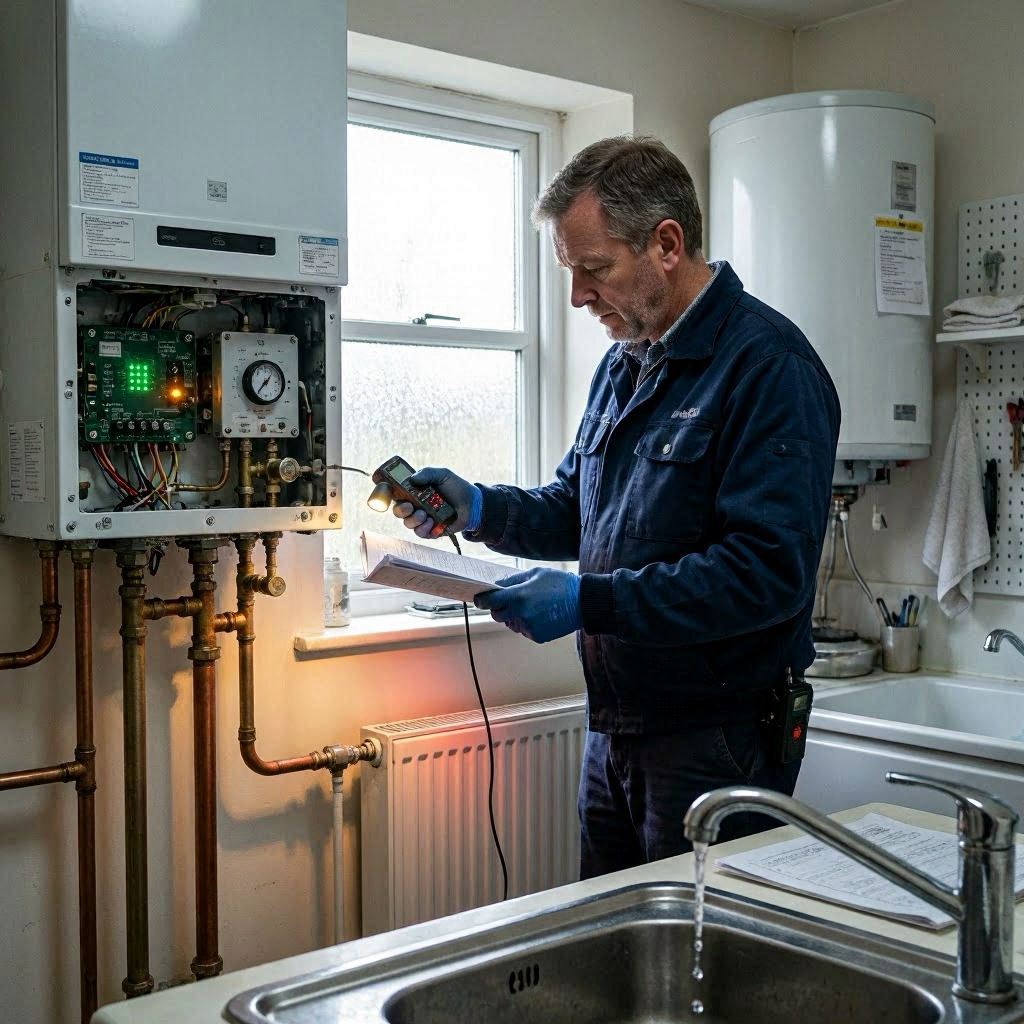
Turn your hot tap on to maximum flow. Walk over to your boiler control panel and watch the display screen closely. Look to see if a tap icon appears or if a specific green light flashes. If the screen completely ignores your running tap and continues to display the radiator icon, your internal flow switch is dead or jammed.
2.Perform the Return Pipe Touch Test:Thermal Analysis.
With the hot tap still running, carefully place your hands on the copper pipes extending out from the bottom of the boiler casing. The domestic hot water outlet pipe will feel completely cold, but the central heating flow and return pipes will feel blazing hot. This acts as visual proof that your diverter valve is leaking heat out to your house instead of keeping it in the hot water cell.
3.Execute a Complete Reset and Isolation:Control Overrides.
Turn your wall programmer or smart thermostat completely off so there is zero demand for central heating. Wait 15 minutes for the unit to cool down, then turn your hot tap on again. If the boiler fails to ignite at all now, the internal communication link between your tap and the burner is fully broken.
The Long-Term Protection: Preventing Sludge Failures
If your system diagnostics reveal that a stuck valve is causing your hot water failure, you need to look at the broader health of your heating loop. A diverter valve doesn’t just fail on its own; it gets choked out by dirty system water.
Every year your heating system runs without a proper chemical inhibitor treatment, the internal iron surfaces of your radiators rust from the inside out, creating a heavy, black magnetic sludge. This sludge travels directly into your boiler’s internal moving components.
When you hire an engineer for repairing a boiler with a seized valve, always make sure they install an inline magnetic system filter on your return pipe. This filter captures those tiny metallic shards before they ever have a chance to enter your internal hydraulic blocks, ensuring your replacement components don’t suffer the exact same fate down the line.
A boiler that manages to heat your home’s radiators but leaves your taps running cold is dealing with a classic internal distribution problem. Whether it is a sludged-up diverter valve refusing to slide over into hot water mode, a broken actuator motor that has lost its physical mechanical power, or a blinded flow switch that cannot detect water moving into your pipes, a clear step-by-step diagnostic sequence will always reveal where the loop is stuck. Check your front control panel for tap activation signals first, monitor your pipe temperatures manually, and bring in a qualified technician to open the system and replace the faulty hardware safely.