There is nothing more confusing than walking over to your central heating unit, seeing the digital display lit up, hearing the internal fan spinning, yet realizing your taps are running ice-cold and your radiators feel like blocks of ice. When your boiler turned on but no hot water or heating becomes the reality of your household, it indicates a critical communication breakdown between the electronic control board and the internal hydraulic components.
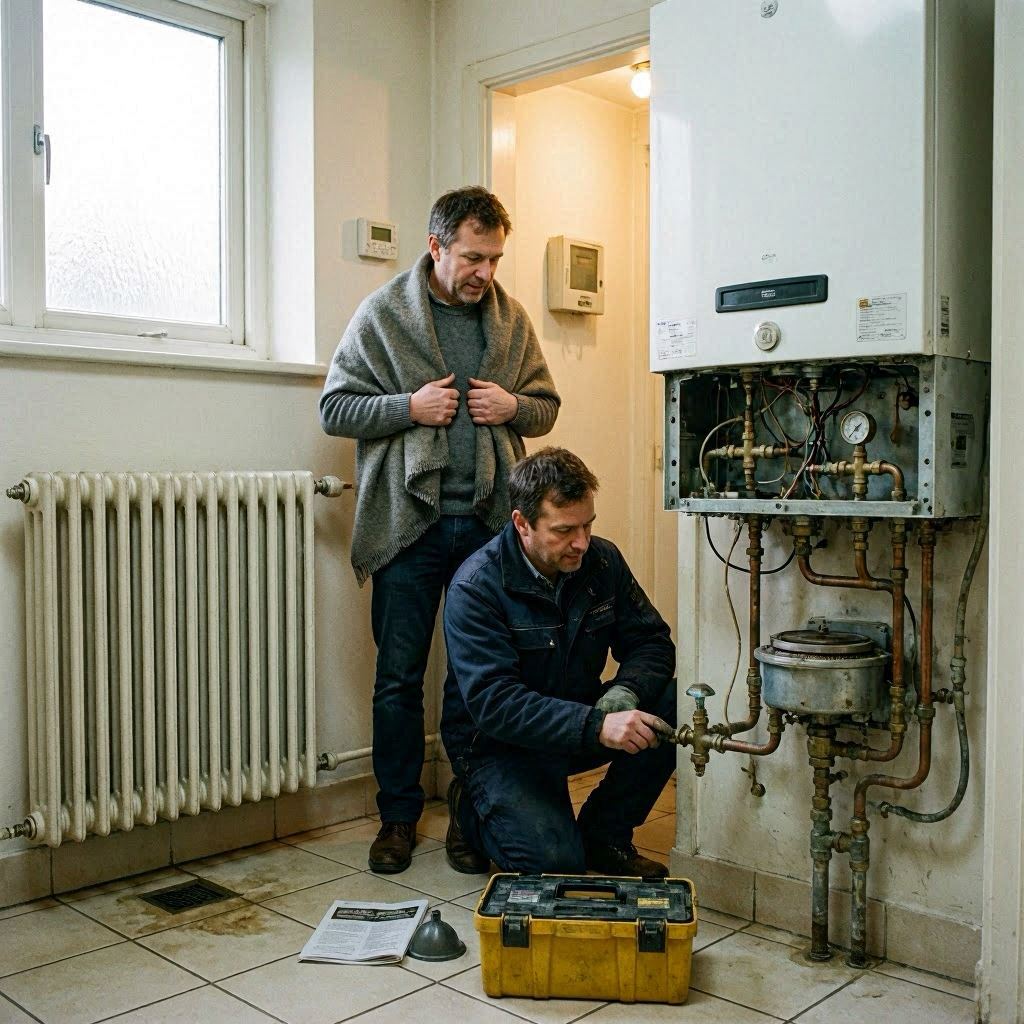
The fact that the unit is powered up means electricity is flowing, but somewhere inside the chassis, a mechanical valve, a circulation pump, or a vital sensor has failed to execute its physical job.
1. The Diverter Valve Jam (The Classic Combi Failure)
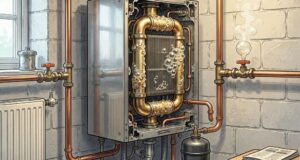
If you own a combination (combi) boiler, your system does not store hot water in a large cylinder; instead, it heats water instantly on demand. To switch between sending heat to your radiators and sending heat to your bathroom taps, the appliance uses a small motorized internal gate mechanism called a diverter valve.
How the Valve Fails
Over years of constant cycling, the metal pin inside the diverter valve can become stuck or coated in dark magnetic iron oxide sludge.
- The Trap: If the valve gets stuck in a central, dead-locked position, the heated water from the main burner cannot flow out of the appliance frame in either direction.
- The Symptom: The boiler fires up because the thermostat tells it to work, but the heat remains trapped inside the internal main heat exchanger loop. The unit quickly overheats and shuts down before any warmth reaches your house.
2. A Seized or Failed Circulation Pump
The primary circulation pump is the heart of your heating system. Its sole responsibility is to physically push hot water out of the boiler casing, through your floorboards, and into your radiators or water cylinder.
Diagnosing a Dead Pump
If the pump motor burns out, or if system debris jams the internal impeller blades, the water sits completely stagnant. The gas burner will ignite, heat the small amount of water sitting directly inside the boiler heat exchanger to its maximum temperature within seconds, and then instantly shut off via the high-limit thermostat to prevent a dangerous explosion.
- The Vibration Test: Carefully place your hand on the side of the boiler casing or directly on the pump body if it is exposed. If you can hear a faint electrical humming sound but feel absolutely no physical vibration or flow movement, the pump is seized.
3. Airlocks and Low System Pressure
A boiler cannot move thermal energy efficiently if the water loop is interrupted by massive air pockets or if there isn’t enough fluid volume to create operational pressure.
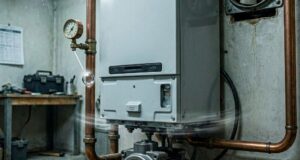
The Zero-Pressure Rule: Modern heating appliances feature a digital or mechanical pressure sensor that monitors the internal bar level. If your system pressure has slowly leaked down below 0.5 bar, the safety logic board will deliberately block the burner from firing up fully, leaving you with zero operational output despite the display panel being turned on.
If your bar gauge reads below 1.0, you must open your silver braided filling loop to introduce fresh water until the needle rests comfortably at 1.2 bar.
Technical Mapping: Fault Analysis Matrix
To help you categorize what went wrong inside your heating loop, evaluate the physical symptoms using the diagnostic guide below:
| Front Panel Status | Physical Machine Behavior | Likely Internal Culprit | Initial Repair Target |
| No Fault Code Shown | Boiler hums gently; pipes underneath remain ice cold. | Seized internal circulation pump motor. | Manual impeller release or motor head replacement. |
| No Fault Code Shown | Hot water works fine at taps, but radiators stay stone cold. | Diverter valve stuck exclusively on the domestic hot water side. | Cleaning the valve pin or replacing the actuator motor. |
| Flashing Error Icon | Boiler fires for 10 seconds, makes a loud knocking noise, then cuts out. | Major airlock or a completely blocked primary heat exchanger. | Bleeding the system or executing a deep chemical flush. |
Step-by-Step System Diagnosis for Homeowners
Before you pick up the phone to arrange a professional call-out, execute this structural verification sequence to see if the issue is an external settings mistake or an internal mechanical failure.
The Method
1.Verify the External Thermostat and Power:Control Check.
Ensure your wall thermostat or smart heating app hasn’t dropped its wireless connection to the receiver link. Increase the target room temperature at least 5°C above the current room temperature. If you hear a distinct click from the receiver but the boiler doesn’t react, the issue is internal to the appliance hardware.
2.Check the Main Pressure Display:Hydraulic Verification.
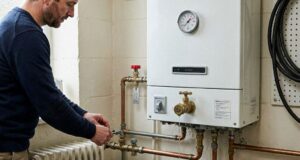
Look closely at the circular dial or digital screen on the front control fascia. If the pressure is sitting in the lower red sector (below 0.5 bar), the safety low-pressure switch has isolated the system. Re-pressurize the loop via the external filling loop until the gauge reads 1.2 bar.
3.Execute the Pipe Temperature Test:Thermal Assessment.
pipe gets scalding hot for 20 seconds and then cools down rapidly while the burner shuts off, you are dealing with a severe circulation failure caused by a dead pump or closed isolation valves.
When to Bring in Professional Intervention
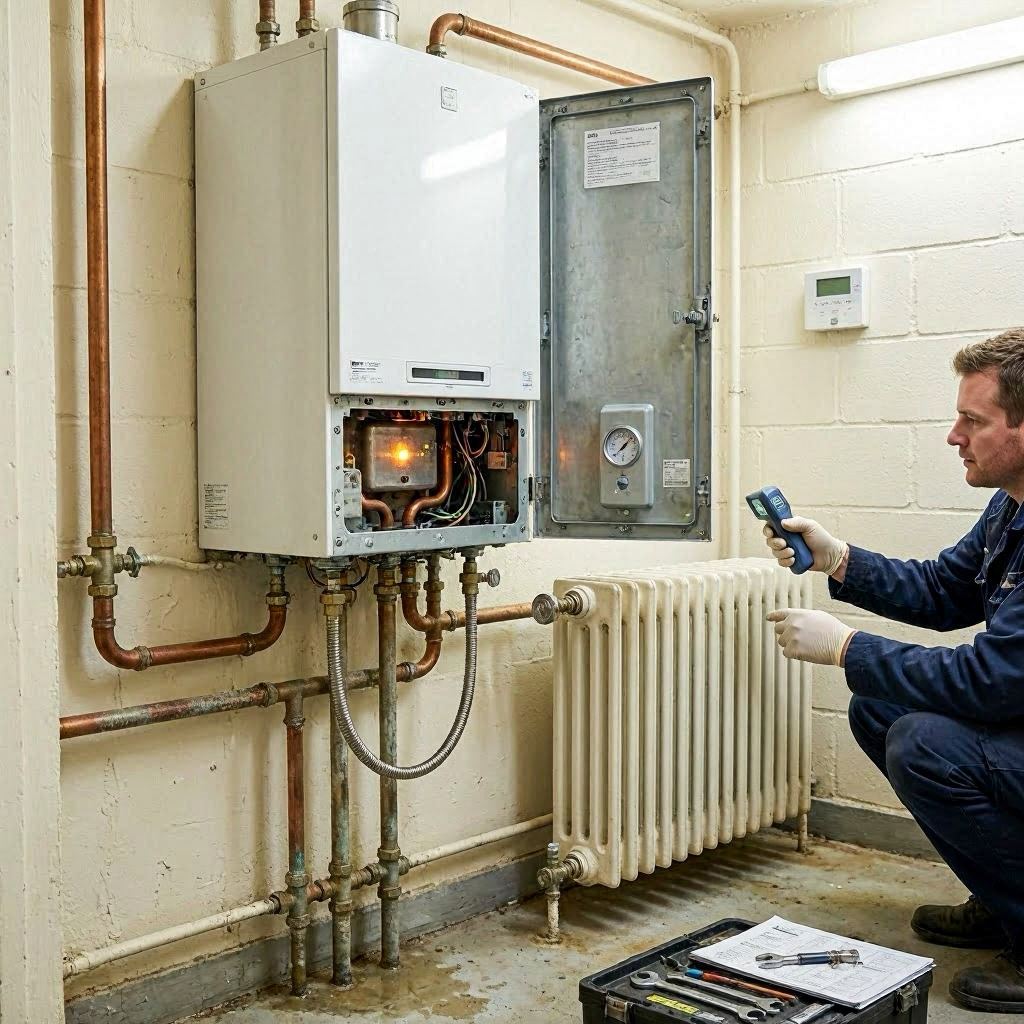
While checking your system pressure gauge or turning up your wireless wall thermostat are perfectly safe DIY tasks, repairing a boiler that has suffered an internal mechanical failure requires specialized tools and certified expertise.
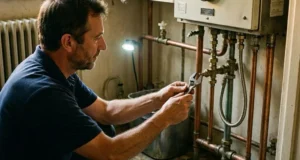
If the diagnostic path leads to a broken diverter valve actuator, a burned-out circulation pump, or a faulty printed circuit board (PCB), the appliance casing must be opened. Modern boilers operate with sealed gas-to-air combustion chambers. Disturbing these internal components without a gas analyzer tool can lead to hazardous carbon monoxide leaks or dangerous electrical short-circuits. A qualified, registered engineer can safely isolate the hydraulic blocks, swap out failed internal components, and ensure the safety switches operate flawlessly before signing off on the system.
Summary Verdict
When your boiler stays turned on but leaves you without heat or hot water, it is almost always a mechanical traffic jam inside the machine. Whether it is a frozen diverter valve refusing to redirect hot water to your home, a seized circulation pump keeping heat trapped inside the chassis, or a safety sensor locking down the burner due to a drop in system pressure, running a step-by-step diagnostic check will pinpoint the exact bottleneck. Check your bar gauge first, verify your thermostat link, and rely on certified professional hands to open the casing and replace internal hardware safely.