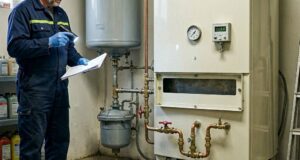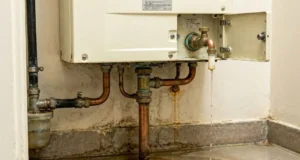
A central heating system operating at peak performance is a silent, balanced machine. However, when the pressure gauge needle creeps past the safe operational zones and climbs into the red sector—accompanied by a live water leak underneath the casing—your system is under severe hydraulic stress. This isn’t an issue you can safely ignore until the weekend; high pressure combined with water leakage means your system’s built-in safety mechanisms are actively failing or working overtime to protect your home from a critical component failure.
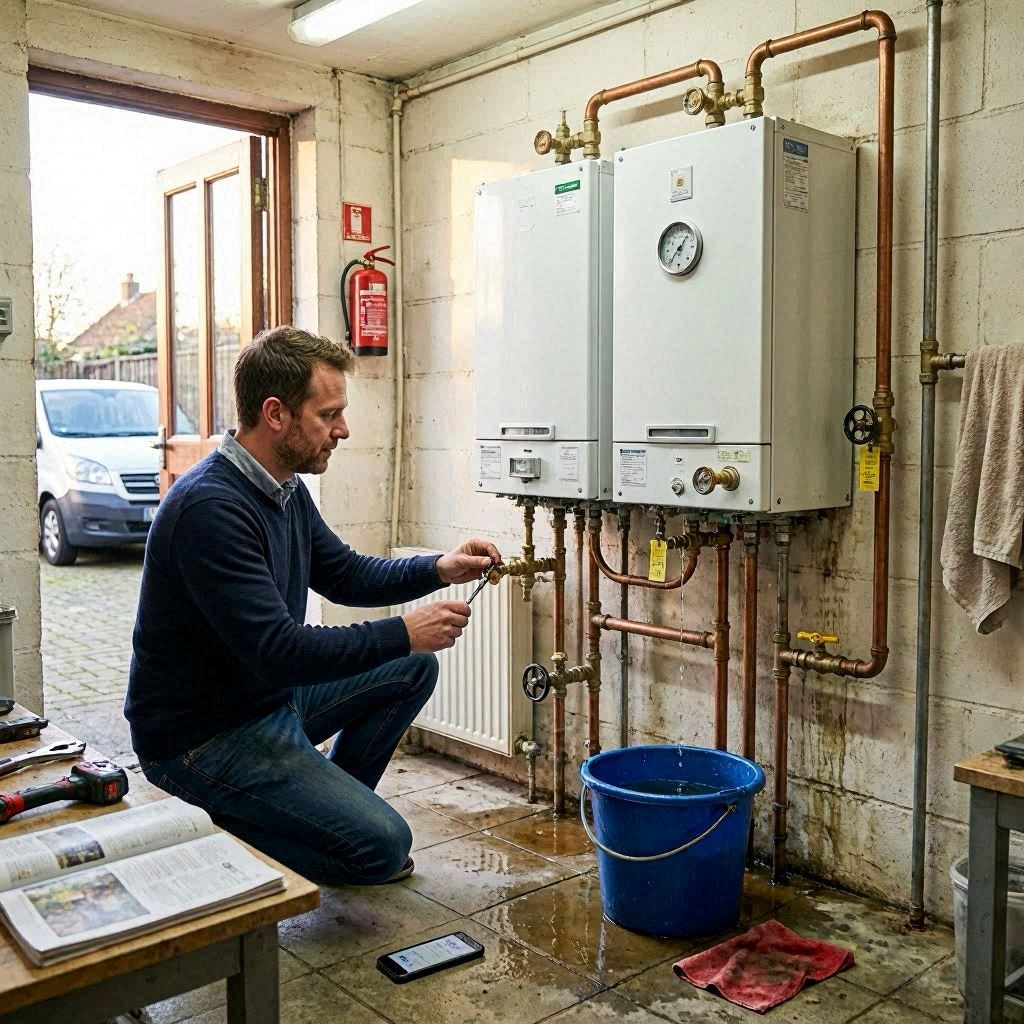
This guide walks you through the immediate safety steps and technical checks required to safely resolve the crisis.
1. The Immediate Emergency Response: Stabilizing the System
Before diving into mechanical diagnostics, your very first priority is to stop the high-pressure loop from causing electrical shorts or damaging your property’s flooring.
Step 1: Isolate the Power
A leaking boiler drops water directly past internal electrical wiring, pump terminals, and the main PCB (Printed Circuit Board). Turn off the electrical supply at the fused spur switch located next to the appliance immediately.
Step 2: Contain the Effluent
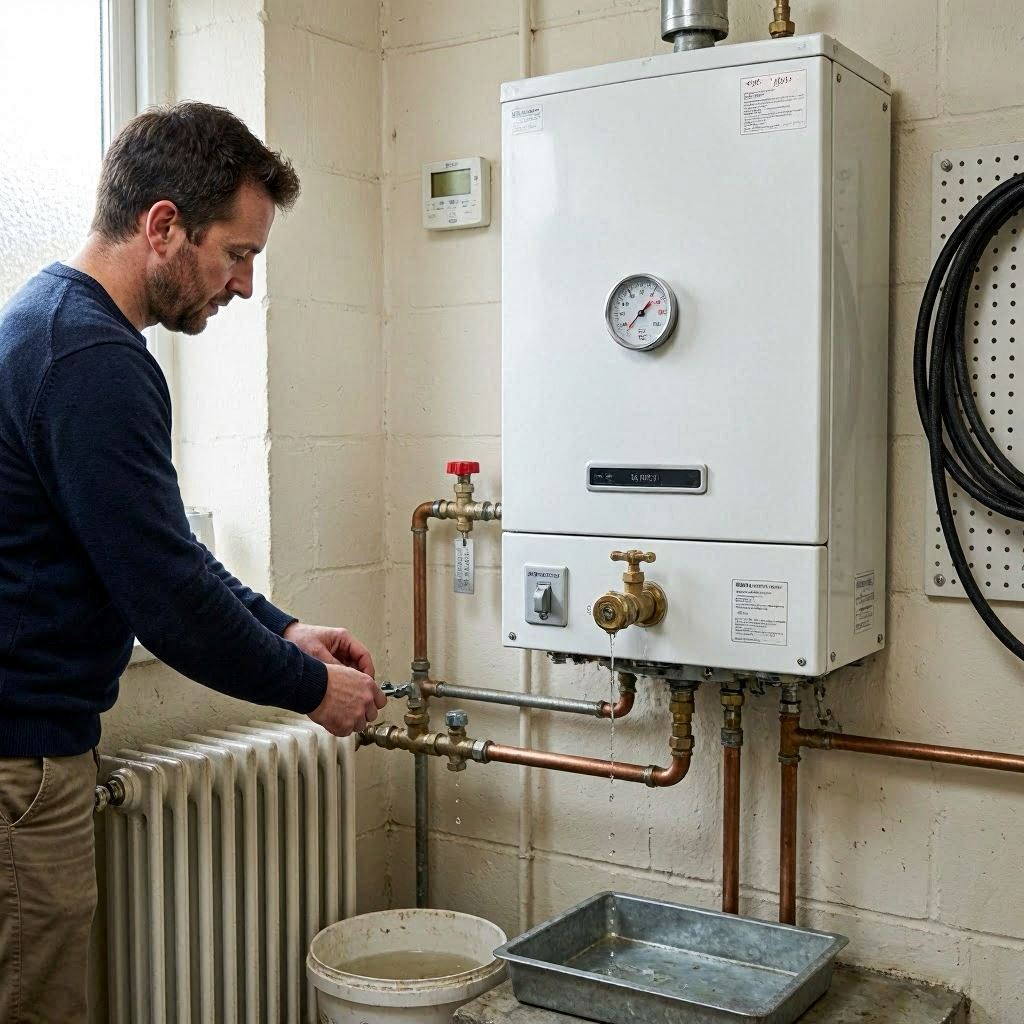
Place a shallow bucket or plastic container underneath the leakage zone. The water escaping from an overpressurized system can contain black iron oxide sludge, which will permanently stain carpets, hardwood, or laminate flooring.
2. Understanding Why High Pressure Causes a Leak
When a boiler’s pressure gauge reads above 2.5 or 3.0 bar, the internal environment mimics a high-pressure cooker. To prevent the primary heat exchanger from cracking under this intense force, a mechanical spring-loaded valve called the Pressure Relief Valve (PRV) forces itself open.
The leak you are seeing from the bottom or via the external copper discharge pipe is usually the PRV performing its exact safety function: dumping excess water volume to lower the pressure. However, if the PRV has been forced open by dirty system water, tiny pieces of metallic debris can get stuck in its rubber seal. This means that even after your pressure drops back down, the valve will continue to weep and leak because it can no longer close completely flat.
3. Two Common Causes Behind the Pressure Spike
To fix the leak permanently, you must diagnose what caused the water volume or pressure to rise so drastically in the first place.
Cause A: The Filling Loop is Leaking Internally
It uses one or two plastic tap levers to let fresh water in when your pressure is low.
- The Fault: If you recently topped up your system and didn’t close the valves completely, or if the internal valve ball seal has degraded, fresh mains water will continuously creep into your heating loop.
- The Result: Your system fills up past its capacity until the pressure gauge maxes out and the boiler starts leaking.
Cause B: A Failed or Depressurized Expansion Vessel
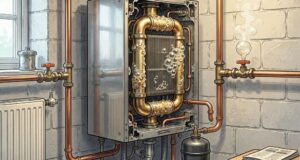
Inside or behind your boiler sits a large metal tank split in half by a flexible rubber bladder. One side holds your system water, while the other side is filled with pressurized commercial nitrogen gas. As water heats up, it expands physically; the rubber bladder pushes against the nitrogen gas to absorb this extra volume.
- The Fault: If the rubber bladder ruptures or the gas slowly leaks out of its charging valve over the years, there is zero room for water expansion.
- The Result: The moment your heating turns on, the expanding water instantly drives the pressure needle up into the red zone, forcing the boiler to leak from the safety valve.
Technical Troubleshooting Matrix: Pressure and Leak Correlation
| System Symptom | Underlying Component Fault | Immediate Remedial Action |
| Pressure is at 3.0 Bar; water dripping fast from external pipe. | Filling loop left cracked open or internal valve seat failed. | Ensure both filling loop handles are turned 90 degrees to the pipe work. |
| Pressure spikes only when radiators get hot; drops to zero when cold. | Internal expansion vessel has lost its air charge or bladder is torn. | Requires an engineer to test the air valve and recharge the internal tank. |
| Pressure is back down below 1.5 Bar, but the boiler continues to drip. | PRV seal is fouled with internal system sludge or debris. | The safety valve has lost its seal integrity and requires mechanical replacement. |
4. How to Safely Reduce Boiler Pressure Manually
If your filling loop is fully closed but the gauge is sitting dangerously high in the red zone, you can manually extract water volume from your home’s network to lower the pressure back down to a safe level (1.2 bar).
The Radiator Relief Method: The safest and most controlled way to reduce internal system pressure without opening the boiler casing is to manually bleed water directly out of your radiator network.
The Method
1.Allow the System to Cool Completely:Thermal Preparation.
Never bleed a system while the heating is actively running or hot. The water inside can cause severe scalding, and hot water expansion will give you an inaccurate pressure reading on the display dial.
2.Attach the Radiator Key and Prepare Containment:Tool Setup.
Locate the bleed valve at the top corner of your highest radiator. Insert a standard brass radiator key into the central square peg. Hold a small cup or thick towel directly underneath the valve nozzle to catch escaping water.
3.Open the Valve and Discharge Water:Volume Reduction.
Slowly turn the key counterclockwise (usually a quarter or half turn). You will hear air hiss out first, followed by a steady stream of dark system water. Let the water flow into your container. You are intentionally draining volume to depressurize the system loop.
4.Monitor the Gauge and Lock the Valve:Pressure Calibration.
Have someone watch the boiler gauge panel, or close the radiator valve periodically to check the pressure yourself. Once the needle lowers down into the safe zone—ideally reading 1.2 bar—turn the radiator key firmly clockwise to seal the valve. Wipe down any residual moisture.
When Professional Boiler Repair is Mandatory
While bleeding your radiators is an excellent emergency fix to stabilize your home, it only treats the symptom, not the underlying cause. If your pressure spikes right back up into the red during the next heating cycle, manual venting will not solve the issue.
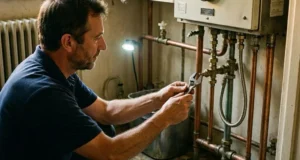
The process of safely repairing a boiler with a failed expansion vessel or a seized internal safety valve involves technical variables that fall under strict legal and safety regulations. A certified heating engineer must be brought in to test the internal bladder pressure using a dedicated digital pressure gauge, recharge the vessel with a manual pump, or safely isolate the main hydraulic blocks to swap out a compromised PRV. Attempting to open the room-sealed combustion casing yourself carries a heavy risk of disrupting gas joints or damaging internal electronics.
Seeing your boiler pressure sit too high while water leaks onto the floor is a clear signal of mechanical overload. Start by isolating the electrical power, check that your silver filling loop taps are turned completely off, and use the radiator bleed method to safely drop the internal pressure down to 1.2 bar. If the needle remains stable, your system is temporarily safe; if it climbs straight back into the red zone when the heating fires up, isolate the unit and call a certified technician to service the expansion vessel before internal corrosion ruins the entire system.